Monday, June 15, 2015

Not Knowing: The Little Spearfish Trail

The day following the IDS post (wherein I lamented the lose of data coverage and the resulting inability to know stuff about where we were),  we were physically reminded of the joys of having too little information.

Since we didn't have maps or ideas of where any trails went, we choose to take the trail that went by our campsite in the Black Hills of South Dakota. After 10 days of driving, sometimes a bit, sometimes for nine hours; a day of not driving at all was very appealing.  The trail, where ever it went could be just as good as any other.

We set off early in the morning, hiking west, and up. Our idea was to hike out two hours, and then, if the trail still went on, just turn around and hike back. It was a beautiful clear morning, and after less than a mile we came to the trail head and discovered that we would be walking on the the Upper Little Spearfish Canyon Trail. Still no idea where it went, except that judging by the name, we figured it went up the Upper Little Spearfish Canyon, which coincidentally was the name of the canyon we were in, and the name of a trail we'd also seen marked further east and down the canyon.

At first the trail followed along what we assumed was Little Spearfish Creek and opened out into a small valley meadow. There were lots of signs of beaver activity. Trees gnawed off at beaver-high levels, little dams, and finally, one lodge. We didn't see any beavers, but we did see lots of wildflowers, birds and even an osprey.

After about another mile the valley widened out, the trail crossed the creek and began winding up
through an open aspen and pine forest with more wildflowers, it also began just slightly turning to the South. It was while walking though this section that we saw a Mule deer, the first of several we saw on this hike.

The trail continued climbing and took another turn so that we were headed due east. I began to suspect that the trail was actually a loop which should return us right back to our tent, but for now we were hiking through an amazing pine forest, the floor covered with yellow daisy-like flowers. I didn't know what they were, but that didn't make them any less beautiful.

After about two hours we reached what appeared to be the summit as the trail turned north and started heading down. If the loop theory was correct continuing on would take us back to Little Spearfish Canyon, then turn West, up the road.

And so it was that an hour later we were back at the tent having completed a lovely little hike up and around Little Spearfish Canyon. A totally unplanned, unexpected surprise.  There are joys in not knowing, you just have to go with it to find them.

Sunday, June 14, 2015

A guest blog by SD: Silent Dave; some lessons learned living on the road.

Pancho and Lefty
Song by Willie Nelson, Merle Haggard

Livin on the road my friend, is gonna keep you free and clean
Now you wear your skin like iron
Your breath as hard as kerosene

A guest blog by SD: Silent Dave.

Well our skin is quite tanned living outdoors most days, maybe after a few years it'll be like iron, but I doubt it.  Our breath is not that bad, we do brush and floss regularly.  But living on the road does have it's peculiarities.  We've been on the road for a bit more than two weeks now, here are some things we've discovered, I'm sure as time passes we'll be faced with more.

Camping is great, and we've stayed in some great places, but the best were not in national Parks.  The National Parks tend to get filled with mega campers with lots of kids.  Not our scene at all.  We've discovered National Grasslands and National Forests to be the best so far.  As we get further out west we will be checking out BLM land.  All of these are generally primitive, meaning there might be a pit toilet and water, or nothing at all.  Great places to camp but you need the right equipment.

A good tent is essential.  It doesn't need to be large, ours is a 6 person dome tent, but it does need to stand up to wind and rain, and bugs.  Our tent has some issues.  We will be looking to replace it some time soon.  After more than a decade of use the poles are failing and the floor leaks.  Not good, but it has given a good decade of use.

Bugs.  There are more bugs in the world than any other animal (The phylum Arthropoda (“jointed foot”) has the largest number of species. In fact, about 85 percent of known species are arthropods, and insects alone make up about 75 percent of known species. Other arthropods include the centipedes and millipedes; the arachnids (spiders, scorpions, ticks, mites); and the crustaceans (barnacles, crabs, crayfish, lobsters, shrimp, water fleas).) and they all seem to want to bite you.  Get used to scratching, and bug juice. Deet is the only thing that works so far.

Keeping clean is another essential.  Smelling like a 6 day old sock is Ok when you're backpacking, everyone else you meet will smell the same.  But when camping then driving into the nearest town you don't want people gagging when you walk by.  The need for warm water is met with a solar shower.  It is amazing to think how much water we used to use when showering.  Now two of us can shower, and feel clean, sharing a 2.5 gallon solar shower.  We are still needing to get used to our smell.  You can't keep as clean and good smelling as we used to when working in an office.  In a crowded camp ground we've done the old sponge bath, might not be optimal but it sure makes you feel better.  Back to basics I guess.

http://www.theinertia.com/surf/permanent-impermanence-7-lessons-from-a-year-on-the-road/

Eating is a bit different too.  The Coleman white gas stove has performed exceptionally well.  But you need to think of things that not only will keep for days without refrigeration, but will also be healthy.  We're getting older so we need our roughage.  hard to get, maybe we ought to be doing a Euell Gibbons (http://en.wikipedia.org/wiki/Euell_Gibbons) see this plant, many parts are edible.  Otherwise its canned and dried stuff.  We just got some dried veggies from an organic health food store, we'll let you know how that works.

That's about it for now.  As we get better at this I'll add to it.

Happy trails!

Tuesday, June 09, 2015

Information Deficit Syndrome

- This post is dedicated to all my library friends at FLO and beyond, wish you were here to help and enjoy!

Forget information overload, the information age has spawned a newer, more insidious problem. Information Deficit Syndrome (IDS).

Here we are deep in the beautiful ponderosa pine and aspen forests of the Black Hills National Forest, our campsite, high up Little Spearfish Canyon is tucked into a bend in the river, Firs, pines and aspen surround us and climb the canyon walls. It's sunny, 60+ degrees, blues sky and large puffy clouds overhead....

Mystery Stone Door
...and I can't get any data connection, can't even text. There wasn't any service in the Badlands either (but there was a camp store with wi-fi within a 1/2 mile walk). It's not the texting, or phone calls or even the posting that I miss. It's the inability to find out stuff, that's really annoying. That’s IDS.

For instance, there's this stone doorway in the canyon wall just 1 miles south. The doorway opens to a single cemented-vaulted room approximately 12'x14'. Outside the door, running parallel to the canyon wall is a rock path? or foundation? There are also signs of a well, and maybe some other concrete structure. If there was data service, I could probably find out what all this was. A mine? There are lots of those here, in fact the whole area used to be (and a majority might still be) owned by The Homestead Mining Company. Or was it some kind of real homestead? The site is at a wide bend in the river and there is plenty of level ground for crops or livestock. Not knowing is driving me crazy.

Oh, and the hiking trails. The very helpful guy at the information center in Rapid City gave us a map
Image from a website I wish I'd had access to.
of the hiking trails in the Black Hills. Four of them are labeled as being on the same road as the campsite. And there are trailheads off the road, but the trail names don't exactly match those on the map. For that matter, the map only indicates where the trails are, not were they go. IF there was cell service, I could look up the trails, and probably find a trail map.

Then there is the "Dances With Wolves" winter scene site. That's on this road too. But I only vaguely remember the Winter scene. IF I had a data connection I could watch that.

And what are all these pretty purple wildflowers? And why are some of the pines total brown, standing deadwood?

Well, S.D. has just informed me that the pines are being infected by a pine borer. So that's some information. But how bad is this infection? Are some trees resistant or are they in serious trouble?

Not knowing is one thing, not being able to find out - that's something else entirely. I was a librarian after all.  Maybe you can take the librarian out of the library, but you can take the need for information out of the librarian. Either that, or IDS is a new concern for our generation.

-- And what is a spearfish anyway?


Rain, Wind and Clay


The Badlands National Park in South Dakota is visited by over 871,000 people per year. The majority spend an average of 5 hours, driving the scenic loop, hiking the short side trails and strolling through the visitor center.

A small minority stay a night or two in the National Park Campground, many in monstrous campers, and hike the longer trails up into the canyons. An even luckier minority do so during and after a torrential thunderstorm. S.D. and I now consider ourselves among those lucky few.

Arriving Friday morning, and lucky we did as the one campground filled to capacity by early evening, we set up camp and explored the visitor center and side trails, planning to hike the longer hikes on Saturday.

The Visitor Center had a great exhibit on the geology and paleontology of the area. There was a lot of attention given to the roll that rain erosion plays in the formation of the spires, pinnacles and canyons. Every rain storm washing away significant amounts of the sand, clay and other sedimentary rocks layed down over the previous 67 million years. The clay is especially prevalent and, they warned, makes hiking after rain, extremely difficult and slippery.

That night, we woke up around 2 am, just as the rain started and the wind tried to flatten our tent on top of us. We spent the next hour, inside the tent, holding up the sides. S.D. on the South East corner, me on the South West. There was one moment when pushing out against the wind with both hands and my head that I suggested we might have to abandon ship and seek refuge in Bruce (the van). Other campers were taking that options and we could see head lights as some just up and drove away. But we held fast and eventually the storm blew over.

The next morning, after picking up the pieces, stringing some clothes lines to dry off some bedding, we drove down to the trailhead, where again the signs warned that hiking after rain could be extremely difficult. Sure, we noted, the rain last night was hard, but it's been dry now for over 6 hours, the trail should be fine.

The first half mile of the trail rises straight up. I think the entire trail was nothing but clay. Wet,
slippery, clay. Luckily the clay trail was in a little trough so you could also use your hands and establish three points of contact before moving your foot up a step. And with each step your foot also got a little heavier, since it picked up a fair amount of clay. At one point I just stopped, scrapped the dirt/clay off my hand and rolled a perfect red clay bead.

At the summit the trail took a four mile loop around the flat top of the mesa and we figured the walk would be easier. It was, but...it was still really slippery. The ground was still holding water, as clay soils do, and with every step there was a slide. Some little, some not so little. The hike also took us through a few sloughs along the mesa. Here the clay soil held all the water and formed pools. After attempting to circumnavigate around a few of these, we eventually had to give up and just plow through the middle. It was slightly surreal, hiking in a desert, 80 degrees heat, in water up to our knees.

Throughout the hike S.D. would remind me of the exhibit in the visitor center and remark on how much the water did change the landscape, just one rain fall had moved a significant amount of the Badlands, and it was obvious everywhere.

Back at the campsite, as we tried to save our boots from becoming pottery, the wind picked up again. Not that it ever had really died, and I was reminded of the some movie. A western, the beleaguered homesteading wife wringing her hands by the cabin door and crying about the wind. The wind. It's always blowing and after only two days, I could see her point.

We broke camp (see, I'm even picking up the lingo) early the next morning, just as a few rain drops fell, and the wind lifted the western corner of the tent, warning us of another impending storm.

The park is a beautiful but difficult place, that's probably why it is a park, but as we drove out of the park towards Rapid City it was beautiful.  A reminder that the great State of South Dakota is a varying place and is worth a visit.  As we continue our exploration of our new state of residence, it is becoming plain that South Dakota wouldn't be a bad place to stay a while.  Something we didn't expect.

Saturday, June 06, 2015

Little Tent on the Prairie

National Grasslands
Prairie Sandpiper
Tonight, Thursday night, is our 6th day on the road.  We're camping  in the middle of miles of grass and range land that are part of the in the Fort Pierre National Grasslands. Nothing but sky and rolling range land as far as we can see. The National Grasslands are, like the National Forests, managed by the USDA for the use and enjoyment of all. One of those uses is the right of anyone to camp within the Grassland, where ever they want. We were a little skeptical of this so we'd gone to the Grasslands Office in Fort Pierre to double check. Sure enough, the Ranger assured us. He then helped us understand the vagaries of the road system, cautioned us against camping near any of the prairie dog towns, since there were usually rattle snakes there and it was also prairie dog hunting season. He then pointed out some great site possibilities. Right now, we along with some cows about 5 miles to the North East, are truly enjoying this area. It's like being in a huge green ocean with no other boats around for miles.

Prior to setting up camp, we'd already had a long and eventful day. Early this morning we woke up in Sioux Falls, visited the headquarters of Dakota Post, our new "home" and mail forwarding agent, acquired our new South Dakota drivers licenses, and registered to vote. All before 9:00am.

55 minutes and 67 miles later (the speed limit in South Dakota is 80 mph), we exited I-90 to see the world famous Corn Palace. When that turned out to be a building sided in murals made of corn we jumped back in the car and made our first ever visit to Cabelas. After declining to check our guns at the door we shopped around for large pack towels, a water container and some socks amid all the ammo and fishing hook displays. Checking out, I felt a little out of place not having purchased something that would kill something else but was happy that we had also found a great set of high-sided dinner plates.

And then it was back on the road to see if what we'd read about being able to camp anywhere in the Grasslands was true. It was, and here we are!


Thursday, June 04, 2015

Showering Variables

Much like the house dweller rates fine dinning, showering when camping is a pleasure to be savored and rated. On the road showers vary by temperature (hot and consistent being the most preferred), pressure (please be more than a trickle), ratio between ambient air temperature and water temperature (i.e. a heated shower stall if necessary), ease of clothing and shower accessory arrangement (a dry, private room for clothing next to the actual shower and a shelf within said shower for holding  bathing items), flooring and drainage (clean mats preferred) and overall cleanliness of the facility. Additionally all of these variables can be 'served' by a variety of methods.

It's only been four days that we've been on the road and so far we've 'enjoyed' three separate types of showers, the coin operated, the solar, and the consistent push. 

The coin operated shower, which we experienced on our first morning at the Log Cabin Resort, is much like gambling. The bather can assess the cleanliness, flooring and drainage, and ambient temperature before entering the shower. But the water temperature, duration and pressure are all unknown until the coins are deposited in the slot. Being the first bathers on a cold morning, a good quarters worth of water passed before I was willing to enter the shower, and the pressure was not consistent. Luckily I had a lot of quarters, and the shower area and dressing area were very clean.

For the second shower, we resorted to the solar shower. Since Sleeping Bear Dunes National Lakeshore camping only supplies vault toilets and free water, we had no other choice. The solar showers five gallon water bag warmed up to a lovely 120 degrees during the day so that when we returned from our bike ride, it was ready to go. S.D. strung the bag up in the secluded woods behind the tent. Pressure, and temperature were both very good, as was the cleanliness of the facility. The dressing room was lacking in privacy,there were no facilities for holding bath accessories and there was no control of ambient temperature. However, showering outdoors on a warm day, was fun.

Tonight we're camping at a private campground in Shawano Lake, Wisconsin, and the shower is free. The facilities are clean, the dressing room sufficient, the water temperature hot, and the pressure perfect. It's the type of shower that only runs when the user pushes a button every 60 seconds, but that's just fine. I'm clean and warm and ready to head back to our lovely tent site. 


Wednesday, June 03, 2015

Sleeping Bear Dunes

This morning, it's Monday I think, the sunrise over Lake Michigan was beautiful. Our site at the D. H. Day Campground sits on a little wooded rise just South-West of the shore, just a short walk to the beach, and that beautiful sunrise. We'd arrived at 10:00am yesterday and the Ranger tipped us off to this site. Not only was it the best in the campground (#57), but it was opening up in just a few  hours.

Setting up the tent went quickly. Getting things in and out of the van, not so fast. There's just too much stuff to be able to arrange it so everything we need is accessible. After we set up the tent, explored around a little, and had gone to town to pick up food for dinner, we decided to go for a bike ride. Which meant more un-packing and packing of the van.

Sleeping Bear Dunes National Lakeshore is a long, skinny park along the western side of Lake Michigan between the towns of Empire and Glen Arbor, and including the islands of Little Bear and Big Bear. Most of the coastline is composed of sandy beaches and giant sand dunes. And by giant I mean hundreds of feet high. Along with several interpretive stops including a life-saving station and a maritime museum, Sleeping Bear Dunes also has a paved bike path running almost the entire length. During last year's visit we didn't have out bikes and I could only dream of riding that path. This year however, we were ready! And the path, coincidentally ran right by our already perfect campsite.

Once on our bikes we headed South. The path wound along through  oak and pine forests, open fields, bogs. Sometimes providing views through to the Lake, sometimes the Lake was blocked by the giant sand dunes. It was as nice a ride as I'd imagined.

Today, as planned, we're meeting up with Lyss in the morning, but there's a change of plans for the afternoon, and night. We like Sleeping Bear Dunes, and our site so much
we're staying another night. The weather is beautiful, there's more to explore here and we've got the time.

Rain happens

Today, our first full day of retirement, was to be our first camping day too. The plan was to drive 12 hours from Albany, NY to Sleeping Bear Dunes National Park on the coast of Lake Michigan, where we would pitch our tent. Sure a 12 hour drive was ambitious but the reward was a whole day to play in the park before catching up with Lyss in Traverse City on Monday.

We got a good early start at 5:00am. The weather was a warm 80+ degrees. The forecast was for rain, but the sky was clear and I-90 was wide open. S.D. and I took turns driving. First there was the four hours thru N.Y. and then the four in Canada. The terrain for the whole trip was flat and it was easy to see rain clouds South-West and North-West of us. We didn't run into any rain ourselves.

Until. Just as we were about to return to the U.S. the sky turned black, the temperature dropped 16 degrees and the sky just opened up. I crept into the shelter of the customs booth glad just to be out of the torrent and was genuinely sad when the agent let us go after only 2 easy questions. Seriously, did he not wonder why we had South Dakota plates and Massachusetts addresses? What about all that stuff in the van? Could we not have been smuggling illegal camping equipment and bicycles across international borders? Did we not arouse the least bit of suspicion? Not even enough to warrant questioning until this thunderstorm blew by? Apparently not.

Once back in the states however, we still needed to fill up and it was S.D.'s turn to drive. I checked the radar, and sure enough the forecast had been correct, nothing but rain between us and Sleeping Bear Dunes. Heavy rain, and 50 degrees temperatures overnight. Our first big tent pitch was less than four cold, soggy hours away. Have you ever set up a tent in the rain? It's not fun, and once it's up, it's generally not dry. And when it's cold, there's very little chance of it ever getting dry. Our first night could potentially be a cold, wet miserable night.

We'd been on the road 12 hours and were contemplating our fate when we passed the "Log Cabin Resort" just off rt 115, somewhere in the middle of the Michigan Mitten. I'd read about the "Resort" during early trip research and the reviews had mentioned that they had small, rustic log cabins, and an excellent shower facilities. The cabins would be as close to tenting as you could get and, even after 6 hours of rain, still be dry. S.D. did a 180 (Bruce actually has a decent turning radius) and we scored a sweet little cabin, the last available one they had. So now I'm typing this inside Cabin #1. Our first night of the adventure won't be in a tent, but it's a close, dry second and tomorrow when we pitch our tent at Sleeping Bear Dunes, it will still be dry, and there will be lots of time to play.

Friday, May 29, 2015

Top Things I'll Miss About New England

Barn Island, winter 2009
Having grown up and  lived most of my life in New England, leaving it is bittersweet. I'm really looking forward to new adventures on the road and on the trail, but there are also so many things that I am going to miss.

The following is a list, of not all, but of the top contenders (not in any particular order).

  • Puritan gravestones - these guys carved up death like no one else.
    Ipswich, MA
  • Bahston accents - Seriously, this is the most wicked accent evah. 
  • Commuter Rail and the MBTA - What can I say, I've just got a 'thing' for mass transit.  On the one hand it's going to be a relief not to have ride every day. On the other, it was a memorable experience to be a bona fide commuter on the oldest mass transit system in the country and second oldest in the world
  • Stuffies - with the fondest of memories of days in Rhode Island, and Grossman's seafood on the road to Noank.
  • Conomo Point, Essex MA
  • The Atlantic Ocean off the New England Coast- Favorite spots (from South to North) Bluff Point, Noank, Barn Island, Napatree Point, Salem Sound, Cape Ann, Essex River Basin, Crane Beach, Plum Island. But really, anywhere on the coast.
  • Eastern bluebirds - they are just so Blue! and so New England.
  • The White Mountains - New Hampshire hiking and mountains are some of the best, and have often been our refuge. Where ever we climb next, we'll always be thinking of the Whites.
  • Awesome co-workers - at both current and past jobs from Mystic Seaport to Eastern Mountain Sports, Connecticut College, ERBA, and FLO. Some really great folks. Hopefully many of whom we'll stay in touch and meet up with again.
    2008 EMS Waterford Crew
  • Neighbors - the Montserrat Neighborhood of Beverly! While I've never been able to discover why it's called Montserrat, the mystery has not kept the folks there from bringing out all the best a neighborhood can be. We've shoveled snow together (okay they all have snow blowers, while we only had shovels and Dan especially often took care of our big piles before we could), exchanged plants, gossiped on the street corner, sorted through each others yard sales, watched each others' houses when someone was on vacation and just had a generally good time together.
  • Friends, and here I include those awesome co-workers and neighbors - Nah, I'm not going to miss you, you'll all be on the road with us, and we'll meet up soon!


Wednesday, May 27, 2015

Insiders Tour of Tennessee


Southern Tennessee was the last stop of our pre-retirement vacation.  We went to visit a good friend,  and an excellent ambassador of the state.  We'll call her Margie.  During our three day visit we saw the hidden, and world famous highlights of the area.

First a little geography.  The area we'd be exploring was on the western edge of the Cumberland Plateau.  The Plateau is a large, flat-topped table land that rises, in some places, as much as 1000 ft above the surrounding areas.  Since the Plateau is composed mostly of sandstone, the rivers and streams that run through it have easily cut out steep and deep gorges.

Margie's house is on the side of the Plateau, over-looking the valley to the North.  This meant every room, and the deck had amazing views, and that every trip started with a drive down hairpin curves to the valley floor.

Day One 

On our first drive down, we headed East for a few miles and promptly drove back up another hairpin turn road to the town of Sewanee, home of the University of the South, a classic Gothic / wooded campus.
Natural Bridge
Heading East from there we came to the town of Monteagle, and drove through a lovely assemblage of Queen Anne cottages.  The Monteagle Sunday School Assembly was founded in 1882 and dedicated to housing those interesting in spiritual pursuits...and building and maintaining lovely cottages.

We then got our first hint of the wonderful forests of the area and took a short walk to the Natural Bridge.

Lynchburg - the town that Jack Built
For dinner we went to a great Italian restaurant, Sernicola's, in Cowan. 

Day Two

After coming down from the mountain we headed North West to the town of Lynchburg and the Jack Daniels Distillery.   I don't drink whiskey and I have no affinity for "Jack" but never-the-less, the tour was really interesting and well done.  It was so well done I was almost tempted to buy not one bottle but the output from an entire Single Barrel. 

Day Three

And then it was time for hiking.  On day three we hiked in the Savage Gulf wilderness area.  First out to the Stone Door and then to Fall Creek Falls.  The Cumberland Plateau woods are generally open and mostly oak and hickory.  It was mid spring and the wild flowers were just past their peak but still flowering in some colder, protected pockets. It was a great hike through some pretty country.

S.D. on the Plateau
Day Four

Day four was our last day, only a morning really but Margie cooked up some biscuits, sausage and gravy so we could experience more of Tennessee.  With breakfasts like that, it's good that the state has such excellent hiking!
Fall Creek Falls - highest falls East of the Rockies


Thursday, May 21, 2015

Monadnocks of the World

Monadnock: an isolated mountain resulting from the erosion of less resistant rock around a volcanic or other rock resistant to erosion. (wikipedia)

Driving the beltway around Atlanta, Georgia I was certainly not thinking about monadnocks or, given
the flat plains around us, even hills, when rounding a bend in the highway a giant rock mountain rose straight up in front of us. A quick Google maps consult revealed that we were looking at Stone Mountain, an 825ft high quartz monzonite monadnock. Who'd a thunk it?!

S.D. and I had come to Georgia to visit relatives not go hiking and so we zoomed on by arriving at our destination twenty minutes later. After catching up on family happenings and enjoying a wonderful dinner I asked our host if they knew anything about Stone Mountain. They did! And even better it was not just a mountain but a park with hiking trails. We had some free time in the morning and they asked if we would like to climb it? We certainly would!!

The following morning was brilliant, sunny, clear and 70 degrees. After another great meal we headed off to Stone Mountain and once again found ourselves staring at this giant rock those rose up, almost straight up, out of the surrounding plain. The 1. 3 mile hike to the summit made for a nice little workout/scramble over the mostly granite trail. A cable car scales the steeper east side of the mountain and our hosts elected to ride that to the top. When we arrived, hot and sweaty, they were waiting, calm, refreshed and enjoying the view.

To the west they pointed out Atlanta. Due north, maybe 50 miles away, were the foothills of the Appalachians and Springer Mountain the southern terminus of the Appalachian Trail. The view was impressive.

Back at the base our hosts toured us around the park that encircled the rock. It was great to see how well cared for and used the park was. Additionally the Visitor Center that had a great exhibit on the geology of the area and it was there we learned more about monadnocks. I had always know of, and climbed, Mt. Monadnock in New Hampshire but did not know that it was the source for the name of an entire geological feature. Monadnock was originally a Native American term for an isolated hill or a lone mountain that stands above the surrounding area, and was applied by English settlers in the early 17th century to the highest, lone hill in Southern New Hampshire. Geologists took the name and applied to all other similar formations. Formations like Uluru, formerly know as Ayers Rock, Koppie in Tanzania and Stone Mountain, Georgia.

There's something about a giant rock rising out of earth that draws your attention and respect and certainly adds a nice twist to our vacation. 

Tuesday, May 12, 2015

Magic Between the ICW and the Atlantic Ocean: A1A Land

There is a magic land in Florida. A place where people live only to enjoy the wonders of ocean, and sand and plants never cease to amaze . Contrary to popular belief, that place isn't located in the center of the state.  It's on the Atlantic coast between the Ocean and the Intercoastal Waterway. I like to call it A1A Land, after the road that runs mainly through the center end-to-end.

Last week, S.D. and I left the cold, wet, still-melting snow piles of New England, and found ourselves under the sun in the day and the full moon at night - in A1A Land. It was the perfect place to celebrate the marriage of two very fine people, happy to be with each other, and happy to be in love. Because that's what magic lands are for.

And yes, like the other magic kingdom in Florida, it is mostly man-made.  Created by various canal companies in exchange for huge tracts of land. Canal construction began in 1854 as part of the same canal building phase in U.S. history that followed the successful completion of the Erie Canal. Major construction however, took place between 1880 and 1910 and included lots of competition and cooperation with Flagler's railroad which vied for land on on the same route.  Finally by the 1930's the canal went from private ownership to public and development of the resulting strip of land between the canal and the ocean boomed with wealthy elites snapping up the pristine ocean beach-front property! http://www.aicw.org/pdfs/browardlegacy.pdf

But the exclusiveness and artificialness aside, I love it. Love that it celebrates the tropics, ocean, sand, and weather. Crossing over any of one-hundred or more drawbridges from the mainland to A1A land is a passage from a world of asphalt and neon to one of coconut,  date trees, royal palms, sea grapes, oleander and millions of other lush tropic plants.  Heavy, humid air changes to tropic breezes. Even the smell of the ocean is cleaner in this land. And then there, often, is the sound of the crashing waves.  A place and experience shaped by the weather (more so than other parts of Florida), celebrates the tropical life, public parks, it's man-made but really did a nice job.These days there are even bike lanes! (that magically appear in the middle of the road just on the other side of the drawbridge.)


Friday, April 24, 2015

Why South Dakota?

When telling people about our plans to sell everything, buy a van, go to South Dakota to establish residency, then go West to go bike touring and backpacking, the first question they ask is, "Why South Dakota?"

South Dakota, it turns out, is pretty cool. It has the Badlands, the Black Hills, and the Grasslands.  "Rocky Raccoon", and "The Ballad of Hollis Brown" both take place in South Dakota. It was the home and setting for three of Laura Ingalls Wilder's books, and currently the Laura Ingalls Wilder Historic Homestead.  For motorcycle fans there is the Sturgis Motorcyle rally every August. An event that draws over 460,000 attendees, increasing the state population by almost half. Apparently it is also a state that sells itself as being a better place to live than Mars.


But until that campaign catches on, South Dakota is the the 5th least populated, 5th least densely populated state in the union. In 2013 the population of South Dakota totaled 853,175 and was composed of 323,136 households, each with 2.45 people per household.

While all those  reasons are great. The real reason we want to become two of the 61516 "residents" without a household is because South Dakota is the perfect place to 'live' without having to live there. The state laws, taxes, vehicle registration and licensing requirements make it the perfect home for nomads.

Sunday, April 19, 2015

Mass Liquidation - the emotional and logistial challenges of de-stuffing

With the house under contract, the car replaced by a van, and less that 7 weeks until we leave, it's time to start getting rid anything that won't fit in the van. And while we never accumulated much in the first place, letting go of what we do have is a lot more difficult that I'd expected. And it's difficult for both emotional and logistical reasons.

1. It's worth less. A lot less than we paid for it, and even less than that. And while rationally, that's  understandable, it's still hard to accept. For instance, there's my Big Agnes LuLu down sleeping bag and pad. New, they sells for $220. In like new condition I haven't even been able to sell them for $60.00. Someone offered $20 for the pad, and then asked me to include shipping. (The exception to this rule are the junker cars and trucks that S.D. buys. He's bought and sold a car a year for the last 6 years and comes out ahead every time.)

2. Some of the stuff defines you, or rather it's the owning of the stuff that defines you. All due respect to Henry David Thoreau, but sometimes this feels like a good thing. My kayak. Eliza, falls into this category. I love kayaking. Being right on the water. Exploring the tides, riding the waves, paddling along. I am therefore, someone who owns a kayak. And while having the kayak on top of the van, bicycles hanging off the back would look cool, the reality is there is not much opportunity for kayaking on the PCT, nor does trailering a kayak on a bike tour make much sense. And so the kayak, the paddles, the life vest, all must go.  Went yesterday actually.  This morning I'm still feeling the sad emptiness of being a kayak-less, kayaker.

3. Varieties of stuff give you options. Shoes, for instance.  Having lots of different kinds of shoes gives you infinite options. For hiking alone there are five options: regular trail shoes, waterproof, lightweight trail-running, leather hi-top boots and insulated winter boots  Somehow I have to whittle the collection down to three?  and I have two in each of those categories. Then there are dress shoes. I can only keep one whereas now, I have no clue what the count is, the options currently are endless. What one shoe can fill them all?

4. Some stuff represents stories, or places, or people. Stuff makes experience concrete. Will giving up the stuff lighten the attachment?  Originally I insisted on taking "Herman" our mythical fish painting. Not only is it a cool painting it's the first, and only, painting S.D. and I selected together, and we bought it the first year of our six years here on the North Shore of Boston. To me, it symbolizes our time here. Keeping Herman would keep the connection to that time of our lives.  And yet...."Herman" is a big painting, roughly 3' x 5'. Taking it would require some significant van space.  And so "Herman" is getting sold too.

5. It's biological impossible to take/keep. The spice bush that is now growing on the hill in the front
corner is a fourth generation offspring of the spice bush from my first home in Hopkington, RI. In fact, many of the plants in the garden are progeny of plants I've had at other houses. Since 1984 I've moved 7 times, and in all but 2 of those moves, there have been gardens, gardens that often were filled with plants moved from the previous house, or from my mother's last garden. The Siberian Iris's from Tom Wheeler Road, the Shasta Daisies from Clarks Falls Road, the Lord Camden, and Peach Daylillies from the house on Hangman Hill, all in North Stonington. The Blue Lace Cap Hydrangea is from Mystic.  The cranesbill geraniums, Montauk Daisies and Black Bearded Iris are from Mom's house.  Don't tell S.D. but I did, once, seriously try and figure out a way to take something of these with us. After all, many are tubers that can stay dormant for long periods. But, considering we probably won't have a place to plant anything for three years, I just had to let it go. Watching everything come up, one last spring, is bittersweet. I do hope the new owners appreciate them.

And then there are the logistical reasons.

6. Getting someone to just take your stuff, all your stuff is hard. Sure we can find someone who will come in and cherry pick, give us a small check and take most of the stuff. But then we're left with a couple truck loads with no where to go just when we have everywhere to go.

7. Craigslist. Do I really need to say more?  Selling, or giving away stuff through Craigslist is always an interesting experience. Stuff you think will sell, doesn't. Stuff you think no one would even take for free disappears in minutes. And always there are the interesting email offers and negotiations.  It's fun, and interesting if you have a lot of time. Not so great for mass liquidation.

And so, as hard as it's going be we're going to have a yard sale/charity donation. More of a liquidation, we're-selling-it-all sale, two weeks before we leave. Everything we need to keep for the trip and  selected family heirlooms are going into the van, the rest is going to sold or given away.

-------------------------------

Originally this post started with the following:

Whoever said "I think therefore I am" obviously didn't live in the United States.  Here, the correct existentialist statement is more along the lines of "I own, therefore I am".  Without stuff it's harder to know who you are. If I don't own, who am I?  

I'm starting to think that aside from being someone who doesn't own anything, I'm starting to get very excited about the options.

Sunday, April 05, 2015

Travelment : A Proposal

The English language is versatile and descriptive.  It currently contains over 1,000,000 words but even that's not enough. The Oxford English Dictionary adds new words at the rate of 1000/per quarter. And yet, with all those words, old and new. I can't find the right word for my next phase in life.  Or to put it another way, I've got an issue with describing what we're doing as 'retirement'. 
There has got to be more options that this!

a :  an act of retiring :  the state of being retired
b :  withdrawal from one's position or occupation or from active working life 

 Neither S.D. nor I have any plans to be retiring. Sure, we're not going to be working for a paycheck, but we're  going to be active, and we're going to accomplish stuff. In fact one of the reasons we're 'retiring' is so we can be more active and get more done. Sitting and earning a paycheck while not fulfilling our potential is not living.

Yeah! That's what I'm talking about.
What are alternatives to 'retirement'? You could say we're going into activement.  But then that seems a bit too broad. It could be describing a life lived in a gym, or even on a treadmill. We're going to be active but with a purpose, we're going places. Going to live as light and close to the ground as possible. Going to travel as a way of life.  How about travelment?

Travelment
a: the act of traveling as a way of life

And there's lots to do. 

Sunday, March 29, 2015

The House Selling Song

(sung to the tune of "Life's Been Good To Me So Far" by the Eagles)

Listing Link

I've got a house on a friendly street
If you want it, then we should meet.

The space is great, the floor plan's open,
Colorful walls and the floor is oaken

It has a bath with a heated floor
The master suite right out the door.

The basement finished with paneled walls
For your man cave, it's got it all

The view off the deck is really sweet. 
When the garden blooms, it's a calm retreat

In the summer you can walk to the beach
By car or train, Boston's is in easy reach

We're only asking 388.
It's a sellers market, you might want to raise that rate.

Saturday, March 28, 2015

We're Going On the Road...and Trail, and Bike!

For Sale!
S.D. and I are hitting the road! We're selling the house, leaving our jobs, changing our state of residence to South Dakota, trading the car in for a van, selling almost everything in the house, packing what's left into the van and heading West. If it doesn't fit in the van, its not going.  For the next three or so years we plan on traveling around the country, camping, backpacking and bike touring.


Me and Austin
Thirty-six years ago, my sixteen year old self dreamed of packing her dog, Munchkin and her windsurfer into her Austin Healey, and heading West....and now it's going to happen. Sure, Munchkin will be with me in my heart, the windsurfer has been replaced by a bicycle, and the van will be much more practical than an Austin Healey, and I'm much older but now, and best of all I'll have my best buddy ever with me, S.D!

Ah, I fondly remember that awkward first date when S.D. defiantly told me he had no interest in having a house (although he did have a very nice house), his plan was to retire, buy a van, convert it into a stealth camper and wander around the county. Little did he suspect that was exactly what I was looking for, and that rather than scare me away, made me take a second look at the bearded, ex-boatbuilder-turned-fish-biologist-turned-government-bureaucrat. And good thing too! We're only two months away from making it happen.

Here are the details. S. D. is retiring as of May 29. I can't use the "r" word myself, but I'll be leaving my job, effective the same day. If all goes well the house will sell, or have sold just about the same time. We put it on the market today, and with the market being pretty "hot" here, hope to be under contract by mid-April, and on track for a late May closing.

Meanwhile we've begun making arrangements to establish residency in South Dakota. Why South Dakota you ask?  It's a little known fact but South Dakota is a virtual meca for folks who need a residence, but don't actually want to live there. With no income tax, no capital gains tax, a one-night once-every-five-year stay required for a driver's license, and a couple of companies that provide mail forwarding services, it's the perfect state if you plan to be on the move.  Once those arrangements are complete we can buy, and register the van (in South Dakota, by mail).

After the house sale, a week or two before the closing, we're selling almost everything in the house. If you're interested in buying anything let us know. Or stop by. We don't own anything fancy, but what we do have is useful and in good shape. Some stuff will be difficult to part with, it's funny how much things can mean to you, but if it won't fit in the van. It's got to go.

Then the house sale, then we head West!

First stop will be Traverse City, Michigan to visit Lyss, then UP. We're going to South Dakota via the Upper Peninsula.  Once in South Dakota, we have to spend a night in our new state, get our driver's license and move on. We might linger awhile in the Badlands, they sound really interesting. Lots of nice camping and bicycling locations.

We'll continue meandering west, camping, hiking and bicycling until early to mid July when we arrive in Ashland, Oregon. There we'll rent a storage unit for the remaining stuff.

*Route subject to change
And then the real adventure begins.

At the beginning of August we'll store the van too, put on our backpacks and head North on the PCT (Pacific Crest Trail). We'll hike until the snow gets too deep, or our legs too woobly. Whichever comes first.

And then we'll just see what happens, but for now the idea is to bike around over the winter, eventually ending up at the Southern terminus of the PCT in early spring, then hiking North again. We'll hike until our legs get too woobly, or the snow gets too deep (the snow pack in the Sierra's usually lasts until June).  Once the snow is gone, we'll continue on to Ashland, and complete the PCT.

...and beyond that... who knows. That's a long way away, and a lot of new things away.


Saturday, March 14, 2015

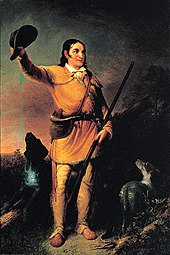
The Quotable Davy Crockett

Apparently, Davy Crockett is a fount of wisdom, a fact that was not apparent to an East Coast girl until a recent trip to Austin, Texas.
Sure she knew that he was the 'king of the wild frontier', that he grew up in Tennessee, that he killed a bear at the age of three, and was himself killed defending the Alamo. She did not know he was responsible for a number of quotes that Texans hold dear to their hearts and identity.

The most popular quote, found just about anywhere from napkins, to buildings, and tea cosies is: "You may all go to Hell, and I will go to Texas".There is even an Etsey store dedicated to the Hell vs Texas memorabilia  https://www.etsy.com/market/i_will_go_to_texas

Texans are obviously proud of their state, and the Crockett quote does a good job of concisely summing up that feeling.

However, the Texans have another popular Crockett quote that seems a bit problematic:
"Be always sure you are right - then go ahead"

So popular, in fact that Fess Parker recorded an inspirational little ditty  based on it, and worth a listen if you're in the mood for good laugh


At S.D.'s suggestion I  looked up some quotes from another famous Texan and found one that is an appropriate counterpoint to Davy's righteous quote, and more to my liking. The Great Kinky Freedman states:

“If you have the choice between humble and cocky, go with cocky. There's always time to be humble later, once you've been proven horrendously, irrevocably wrong.”


Texas State Capital - Home of the Lone Star(s)

Texas Capital
As a bleeding-heart liberal I have to confess, I have issues with Texas. And while Austin's reputation as Hipster South had assured me I would like, maybe even love that city, what I did not expect was that I would also love the state capital building.

I went to Austin to attend an Electronic Resources and Libraries conference held annually on the grounds of the University of Texas (because that's what librarians do these days). Arriving early, and after enjoying an amazing burger I decided to wander about and headed south in the general direction of downtown. On the ride in from the airport we'd all noticed the capital dome. It's hard to miss, huge and shinning there is the dead center of town. And while I hadn't intended to go there at all, I
soon found myself wandering around the 22 acres campus, and then inside the  360,000 square feet capital building itself.

Extra points: The Star is in the center
As you'd expect from Texas, the building is huge! Bigger than the Federal Capital building. But it is also, unexpectedly symmetrical, open and a great place to play Find the Star, or rather Find the Lone Star. According to wikipedia "Texas is nicknamed the Lone Star State to signify Texas as a former independent republic and as a reminder of the state's struggle for independence from Mexico. The "Lone Star" can be found on the Texas state flag and on the Texas state seal today.[9]


Yup - here too
Actually, the Lone Star can be found on a lot more than the flag and the seal. Wandering around the massive capital you start seeing stars everywhere. And not just in the impressively large places like the rotunda ceiling, but also carved into the backs of the wooden benches, in the chandeliers, in the door hinges.


Bench Stars

 I even had to check out the bathrooms just to sure I didn't miss any. (1 of the 3 bathrooms had a star).

And then it was off to the Texas State Museum Gift Shop. Ohhh, the marketing opportunities!!!  That is museum gift shop that probably turns a profit. The Lone Star stuff was everywhere - and it was cool too.  You have to admit, the Star is pretty sweet.
A very small sample

Sunday, March 01, 2015

A Weekend's Visit to the Chesapeake

1879 Hooper Strait Lighthouse
The Chesapeake Bay is a big-ass body of water. With it's rivers, streams, islands and meandering coast, it has an enormous amount of coastline, and an even bigger watershed.  And then there's the Chesapeake Bay Land Area, part sprawling metropolis, part remote farm/fisherman wilderness.  Layered over that is an amazingly rich history...and then there are oysters. And as different as some aspects of it may be from another, they are all connected.

At least that is my excuse. A few months ago S.D. and I visited  friends there for 3 days and I've been writing and deleting posts about it ever since. Trying to get a handle on the whole thing, or even a tiny part, and failing miserably.

This then, is attempt 312.


S.D.as the pensive Lighthouse Keeper
When traveling my biggest hope is that I can somehow get a sense of the area. Doing and seeing stuff that will give me a taste of the people, history and outdoors there are like.  So when our friends asked what we wanted to do during our visit I wasn't sure. What can you do in 3 days to get the feel of the this ginormous area? Luckily our hosts had a much better idea that I did.

Our first stop, and an excellent choice by our friends was Lures Bar and Grille.

The fish was excellent and then there was this thing called cheesy grits. I don't know how they make those, and considering the carbohydrates involved, I don't want to, but those were awesome.

The next day we went to the Chesapeake Bay Maritime Museum. A Museum with the unenviable task of telling the
Best stairway ever! (in the lighthouse)
story of the aforementioned giant watershed that is the Chesapeake Bay in 18 acres, 15 buildings and even more boats. And they do try. Some of the exhibits, like the signature 1879 Hooper Strait Lighthouse, are pretty impressive. Some, like the "At Play on the Bay" exhibit try to cover too much and confuse the message.  Sometimes it was about recreation, and sometimes it seemed to be about the forces in conflict with recreation. The potential for the exhibit to act as a catalyst to conversation about those many conflicts were hinted at, but never fully realized. If it ever is, that would be an amazing exhibit.

Of course there was also lots of great stuff about oysters. Oyster boats, oyster processing, and some really great Oyster Advertising.

It was only fitting that after the museum we stopped at the Fisherman's Inn Restaurant.  With it's extensive collection of oyster plates, it was only natural to ordered oysters, and they were good. However, it was the butternut squash and lobster bisque that made the meal. Wow, that was really good! Even better than the cheesy grits.

The next day we were booked on an afternoon flight home, leaving a few morning hours for more exploration and our host, and expert tour guide wound around some back roads to Jackson's Landing.

Patuxent River marsh
The Landing is a small park on the Patuxent River, a tributary of the Chesapeake.  We took the trail from the parking lot and wound up through a small, random Henry Ford-ish type collection of buildings called the Patuxent Rural Life Museum .  The trail then dropped  down a switchback to a boardwalk.  Along the walk were interpretive signs of the nature-type.  The first one described the area as a Swamp, and half a mile later, another described this area as a Marsh. As a lover of salt marshes, I don't think I'd ever contemplated, or even realized the difference before.  But here for your edification and mine are the definitions:

----

A marsh is a type of wetland that is dominated by herbaceous rather than woody plant species.[1] Marshes can often be found at the edges of lakes and streams, where they form a transition between the aquatic and terrestrial ecosystems. They are often dominated by grasses, rushes or reeds.[2] If woody plants are present they tend to be low-growing shrubs. This form of vegetation is what differentiates marshes from other types of wetland such as swamps, which are dominated by trees, and mires, which are wetlands that have accumulated deposits of acidic peat.

A swamp is a wetland that is forested.[1] Many swamps occur along large rivers where they are critically dependent upon natural water level fluctuations.[2] Other swamps occur on the shores of large lakes.[3] Some swamps have hammocks, or dry-land protrusions, covered by aquatic vegetation, or vegetation that tolerates periodic inundation.


A salt marsh is a marshy area found near estuaries and sounds. The water in salt marshes varies from completely saturated with salt to freshwater. Estuaries are partly sheltered areas found near river mouths where freshwater mixes with seawater. Both salt marshes and estuaries are affected by high and low tides.

---

Salt Swamp (w Cypress Tree)
And now I know! or do I?

The Patuxent is tidal, and therefore slightly salty,  the area of the boardwalk that fronted the river and was identified as a swamp had some lovely cypress trees.  So is it technically a salt swamp?

----

And after three days in the Chesapeake did I have any better understanding of the area? Well our friends certainly helped, and I now know just enough to know that it would take years of biking, kayaking and exploring to get a solid handle on it.  Thanks B and P!

Wednesday, January 28, 2015

When Adventure Comes to You, the Nor'easter

Given all the excitement over the recent snow storm. The competing boasts of most snow, the countless photos of people walking down deserted snow-covered streets, kids sledding and closely monitored road, school and work closings,  the 36 hour news coverage...and the reality that this happens, exactly like this every two or so years, it starts to become clear that the excitement isn't really about it's uniqueness so much as each potential storm is an adventure.Snowstorms aren't unusual in New England, they're a welcome break from the routine, an adventure that you don't have to leave home for, an adventure comes to you.


The January 27th storm was a great example. Like all great adventures it was 70% planning and 30% wtf. The weather forecaster's predicted it a solid 48 hours in advance, giving everyone time to make the proper plans and get the excitement building.

Schools started cancelling classes, parking bans went into effect, grocery shelves were emptied....and then the Governor closed the highways and declared a state of emergency hours before the first flake fell.

All that was left to do, and deal with, were the unplannables.
  • Just how much snow will fall? Will it be a dud, or historic, epic or catastrophic storm?
  • Will the power go out? And if it goes out will you be forced to survive by wrapped up in your down sleeping bag and eating raw frozen meat?
  • Will you get time off work? and if not will the trains run to get you to work? or will you get stuck in waiting for a train in the cattle yard that is North Station?
  • Will the snow be light and fluffy? and if so, and if it's a blizzard, when do you shovel?
  • Will the snow be snowman or snowfort snow? can you even attempt to shovel 24 inches of that? and if so what style of snowman should you build?

In Beverly, the snow didn't start until 10pm. At 2am it still didn't seem all that impressive. After
checking and seeing that the forecast was still calling for 24 inches, it seemed doubtful. At 6:00 I poured my morning coffee and settled back to watch the snow. Unimpressed by the what had already fallen, I soon realized that in the time it took to drink one cup, the snow had doubled!  Without booking a flight, driving for hours or suffering any discontent at all, the adventure had begun!

Thursday, December 11, 2014

Still tiling after all these years

S.D and I have taken a break from hiking and biking and are currently focused on finishing our unfinished basement. It's a great space, big and dry and in desperate need of a bathroom, sheetrock and flooring.

And so this winter we decided would be, what I euphemistically refer to as " adventures in suburbia part three". After getting to know and enjoy the neighbors and then gardening and obsessing over lawn care, we turned to the house itself.  No adventure in suburbia is complete without a bit of house renovation. Sure we had already stripped wall paper off every vertical surface and deep pile rug off every horizontal surface, hired contractors to renovated the upstairs bath and reframed a master bedroom out of two small rooms ( in our first two years as home owners) but now we felt it was time to get really serious.

Earlier this year we had the plumbers come and install the rough plumbing. After S.D. recovered from knee surgery he got busy framing out the bath and washer / dryer room. That was followed by numerous trips to Home Depot and several hours of web surfing as we tried to decide how to deal with the small window on the bath / shower area. The way the room was laid out, the bath/ shower area was 5x3 with a small high window on the long wall. Initially we had wanted to have a large shower stall. But we soon realized that either meant a 5x3 shower (which is the exact measurements of a full sized tub, or we'd need to make a smaller shower and loose the window. Being practical, resale-value-aware folks we opted for a more practical tub-with-window option. That option ruled out pre-formed tub units and left us with only one surround option; tile.

I'd tiled in my former life. A life I now refer to as my days as a construction site queen (Please note earlier posts on the downside of being a queen - a lesson learned much later) . In those days I'd show up young and limber to a professionally prepared bath /shower / floor / backsplash with all the tile and grout selected by the home owner. The "guys " on the construction site would pull out their professional grade tiling tools. With their giant drills they'd mix the thinset or grout and be on standby with a tile saw to make any necessary cuts. I basically spread the thinset, placed the tiles and grouted them. And then cleaned up and went home in time to meet the girls getting off the school bus.

Tiling as a middle-aged suburban homeowner turned out to be a totally different experience. First, I had to pick out the tile and the grout, or rather S.D. and I had to. Neither of us is fond of shopping or even decorating so that made for some fun. Then we had to gather all the tools erring (and erring we did) on the cheap and easy side. Furthermore S.D. had to frame the space and we had to install the backerboard ourselves! It was at this point in the return to construction work that I began to refer to my former vocation as that of a construction queen.  The reality was dawning on me of just how much prep work had been done for me. Not only did working with the crew make the job easier, it also went faster. I'd lay some tile and viola the next day the plumbing would be finished. Now we had to do each and every step ourselves. It certainly brought a new perspective to the job.

All that aside, two nights ago, a mere six months after starting, we finished with the tile. twenty five years after my last job and I can still lay and grout tile like I used to. Although honestly I don't remember being so sore afterwards.