Monday, March 31, 2014

Oregon: Pre-adventure research

In one week we're going to Oregon!

Flying into Portland then off to Bend. After two days there we continue on to Ashland where we'll be staying for another four days before looping back to Portland.
Sun in Bend

So lets talk about the weather. As I write this its March 31 and 22 degrees. We're expecting 3-5 inches of snow tonight. In Bend the temperature is 45 and its 56 in Ashland. And that's all I'm going to say about that.

Bend. One doesn't associate Oregon with desert but apparently a good deal of the state, the entire part that lies east of the north south Cascade Mountain Curtain gets very little rain and is high desert. Bend is home to the Deschutes River, the Deschutes River Brewing Company, and some great hiking trails. I only hope two days is enough time.


Ashland. Ashland is home to the Oregon Shakespeare Festival and one of the favorite refueling stops for thru-hikers on the Pacific Crest Trail. Aside from the usual visitor guides and Arcadia Press picture books, those were the types of books I was expecting to find when researching Ashland. However, when looking for books, I soon discovered many more interesting things about Ashland,


1. It is home to Blackstone Audio, the largest independent audiobooks publisher in the United States, and a company who's audiobooks are heavily purchased by my library.  There's a great interview with the founder George Black on the founding, why they moved to Ashland, and why they support the Jackson County Library: http://youtu.be/buXWlUI5Eyc

2 It is also home to author Scott Blum, and the setting for his three book new-age life-transformation series.

3. It was named as Outside Magazines top 10 towns in 2012:http://youtu.be/8U7liD6Qg5c

4. It has a "pumpkin carrying hippy" who rides a bicycle for a mayor: http://youtu.be/WoOiAubC_qk

Sunday, February 02, 2014

Learning to Bear

Bears, like wolves, are animals I prefer in theory. They are indigenous to all the areas I hike and 'belong' to those areas even more than me, but at the same time the reality of meeting a bear while hiking scares the crap out of me.

Once while hiking up Tecumseh I saw a fox on the trail and for some reason thought it might be rabid. My immediate response was to push S. D. out in front, between me and the rabid fox. The fox casually sauntered off the trail, S.D. was less than amused.

Two hikes later, we were walking up the Wilderness Trail, high dirt bank to the left, Pemigewasset River to the right when S.D. shouts "Bear!" and pushed
me out in front, between him and the bear.  I panicked. What was coming up the trail sure did look like a bear. The blood drained away but just before I  passed out I noticed the pack on the bear's back and a low chuckle coming from behind me.  It was only a hiker, admittedly a very large hiker, but a bearish enough hiker that S.D. thought to extract his revenge for the fox incident.

Since then I've been even more worried about meeting a bear. Freezing, while meeting wild animals is recommended in some situations, but not the recommended reaction when meeting a bear. I have often thought research on the topic would be useful but haven't been able to get past the existing literature with names like and Beyond the Bear: How I Learned to Live and Love Again after Being Blinded by a Bear and Bear Attacks: Their Causes and Avoidance (revised edition) Of course I've read the famous, classic and darkly humorous bear section in  A Walk in the Woods: Rediscovering America on the Appalachian Trail (Official Guides to the Appalachian Trail) but that only helped me laugh off  the situation.


And then I pulled  Out on a Limb: What Black Bears Taught Me about Intelligence and Intuition off the library shelf. Written by Benjamin Kilham, a guy who has been raising and releasing orphaned black bear cubs in New Hampshire for over 20 years, Out on a Limb, has some very comforting thoughts for the average hiker. Basically, even when hikers do the exact opposite of what they should do, bear attacks are very rare. It also has a very useful chapter on how hikers should behave. 

But even more than offering basic advice for hikers, Kilham talks bears. He knows bears. Where they hang out, what they eat, why you shouldn't bother them while they're eating, who they hang out with.  He even describes how they communicate. "MMMM" is good, growls and huffing are not. If a bear is huffying at you with their ears back, get out.

I confess I am more concerned about food. It seems if you have food, a bear can smell it no matter where it is. If they're hungry and they want it, they'll get it.  The important point here is not to be with your food.  Hang it high in a tree if you want, but hang it (all of it) away from your tent. 

After reading the book, I'm still not looking forward to a bear encounter but at least now I have a better sense of what to do. Stand tall, but not raise my arms and attempt to look bigger and more threatening, walk confidently forward if that will not take me into the bear's territory, or away if necessary.


And remember, as S.D. always says, I don't have to be able to out run the bear, only him.


Saturday, January 25, 2014

Snowburbia

An actual morning-after photo
There is a scene in both 'Edward Scissorhands" and "The Truman Show" of morning in a perfectly symmetrical suburban neighborhood where all the husbands come out of their houses and are kissed goodbye by their wives and then go off to work, all at the same time. That is sort of what it's like in my neighborhood the morning after it snows. Except all the husbands leave the house to fire up their snow blowers and commence clearing their driveways and sidewalks.

Except S.D. and I. We are the holdouts in this neighborhood of crisply-edged driveways. We still shovel. Even though it takes longer, even though it may not be as pretty, we still shovel because, well, I like to, SD isn't so sure that he likes it but he's not going to buy a snowblower. We also, coincidentally, have the longest driveway, and being on a large corner lot, the longest stretch of sidewalk.

This confluence of maximum clearable surface, the time difference inherent in snow shoveling vs snow blowing, and the kindness of neighbors, often makes the hour after the snow ends a bit of a race. You see, our neighbors, all 6 snowblowing enthusiasts that they are, are also extremely nice, and helpful, and we can shovel only so fast.

All shoveling here.
It is with this in mind that with every snow storm I am tormented by a variation of that suburban perfect morning. All the husbands come out of their houses, fire up their snowblowers, clear their driveways and sidewalks, and then, in one synchronized swivel, aim for our sidewalks and driveway.

Meanwhile S.D. and I have been innocently, and leisurely shoveling, enjoying the crisp air, the clean sound of the shovel slicing through powder, the muscular flick of the wrist that flows the snow over the ever-growing bank, when suddenly there is a offer of "Do you need any help?", the revving of a gas engine and boom, all the snow is gone.

Monday, January 20, 2014

The Price of Honey

The Jar Of Honey
There are two ways to set the price of an item. One is based on supply and demand, the other is based on the cost to produce.

Honey, like other agricultural products is priced via supply and demand. As such it's priced relatively high, the supply being limited in regards to demand. If however you were to price honey, especially our little jar of honey, based on production cost, it would be worth more than it's weight in gold.

Yes we now have honey! No more bees, but one entire frame of honey.  During the recent January thaw we checked our bees only to discover that they had frozen to death. Most likely because there were not enough of them to maintain the 70 degrees necessary for survival. They did have plenty of stored honey so that wasn't the problem. They just couldn't stay warm enough to get to it.

The frame with honeycomb
And so as we were cleaning up the hive, shaking the dead bees and scraping the propolis  we decided to try our hand at harvesting a little honey.

Honey harvesting is described as a simple process of removing the wax cappings off the honey combs and extracting the honey using a centrifugal abstracter, basically a bucket onto which you load the frames and spin them around until the honey flows out the spout at he bottom. We didn't have an abstracter but we did have time and since we were only going to harvest one frame we figured we could tilt the frame up and let the honey drip down.

Cappings removed and
the drip begins
Two weeks later, it's still dripping, and S.D. has ordered an extractor.  So far we have one half a jar of the best honey ever!  I don't want to do the math but considering the cost of the hive, two packages of bees, an extra queen and all of the beekeeping stuff we needed, the cost of this little jar of honey is more than enough to make it one of the most expensive items, per pound, in our entire house.

Saturday, September 21, 2013

Crash and Ride

Not me - but a close resemblance to my crash
Sitting in the middle of the sidewalk, broken helmet in hand, I knew I should have known where I was, but I didn't. The farm stand sign a little way up the road seemed like it should have been familiar, but it wasn't. I opened my phone to google maps, brushing the blood splatter off the screen, and saw the little blue dot blinking on. "School Street", and a place called "Woodman's" nearby. I knew I should be able to place those, but I couldn't. I had no idea where I was.

It vaguely occurred to me that this wasn't good and that perhaps I needed help. I knew S.D. had just had his left hip replaced two weeks ago and couldn't drive but that he would somehow know where I was. I called Christine and asked if she could pick him up and come get me. I told her to tell him that I was on the "Apple Street Loop". He'd know what that meant. I sure didn't. I asked if it would take her a long time to get to our house. It was only then when I realized I should have known where she lived and for that matter where I lived and how long it would take for her to get to S.D. that I started to panic. She talked me down. I relaxed and closed the phone.

Then I was talking to S.D. on the phone, telling him that Christine was coming.

Then a cyclist rode by and asked if I was okay. I shook my head. "I don't think so " I replied. But I stood up moved around a little. There didn't seem to be any pain. Nothing broken, only my elbow bleeding all over everything. I sat back down on the sidewalk. I told the cyclist my name and address.

A car pulled up. The driver asked if I was okay. "I don't think So " I replied. The car drove off. A guy got out of a car that suddenly was there on the side of the road. He bandaged my arm and started talking on a phone.

Then there was another guy. He lived in the house behind me.

Then my truck drove by, did a u-turn in the middle of the road, and pulled over. S.D. limped out on his cane proclaiming "I couldn't wait for Christine, I tried it and I could drive. " Apparently he's not good at waiting. As Christine was to hypothesize when she arrived at our empty house only five minutes after my call, the white knight syndrome had kicked in and regardless of his non-functional hip he had driven off to save me. Apparently I had managed to tell him I was on School Street, and he'd decided to drive the length of it and find me.

Then an ambulance was on the side of the road. "We're taking you to Beverly Hospital." They told me. That's where S.D. had his hip surgery so I knew it was a nice hospital. Still had no idea where it was or what it would take to get there from here. But at this point, a Hospital seemed a good idea. I was feeling tired and dimly knew sleeping wasn't a good idea.

Not sure what you're supposed to do if you see this while riding
 Time became a bit more linear, and spaces began to fill in by the time we reached the hospital (S.D. followed the ambulance). After two hours of tests and observation I was released. Nothing broken, no cracks in my skull or anything. Now I could remember riding along the road when suddenly there was a giant curb, a curb I was too close to and thinking "Oh Shit!" Between that brilliant observation and sitting on the sidewalk it's still a giant blank. Based on the fact that the bike sustained only a tiny scratch on the brake hoods, my helmet was completely obliterated and the following day I had severe neck and shoulder pain, I can only surmise that I hit that Giant Curb, spun half way around in mid air and stopped the forward progress of a 150 lb mass (me and the bike) hurtling through space at approx 17 miles per hour with only my head.

Thank you bike helmet!

S.D. sent me an article a few weeks later about how 75% all of bike accidents only involve the rider (and a curb, parked car, pothole, etc). Apparently there are lots of folks just like me who fall off their bikes at high rates of speed. What is truly remarkable however is the number of folks who help those unwitting cyclist.

Thank you S.D. and Christine! Thank you anonymous cyclist, car driver and guy next-door! Thank you bike helmet manufactures and bike helmet advocates! Thanks to all of you I (and lots of others) can crash and ride.

Monday, July 15, 2013

We have not yet begun to beekeep

This morning, for the first morning in two months, our bees were up and out with the sunrise, the way bees should be. For the first time in recorded history they also have a productive and laying queen.

We did what we had to do to get a healthy hive. We got a new one. We posted a "hive or nuc wanted" message on the Essex County Beekeepers listserv and an awesome beekeeper from Billerica replied. Ken took us out to one of his beeyards (pictured left) where we sorted through a three box hive. He selected ten frames, one with honey and the rest with brood and honey, and gently placed them into our hive body. All of the frames were full of bees and although she was elusive, Ken located the queen and pointed her out to us. She's a big serious looking queen with a black abdomen and a long black body.

We strapped the hive tightly together, loaded it into the truck, drove our new hive home and settled it into the garden.

We will not give up the hive.

Sunday, July 07, 2013

Adventure(s) Update(s)

Sorry for the recent lack of postings. We've been in a holding pattern but finally have some good news and some bad, eventually good, adventure news.

The good news - I'm training to ride the Blazing Saddles Century, August 17th. (Route pictured on the left)

The bad news - S.D., after suffering with a lot of pain, and losing almost all range of motion in his hips is now waiting to be scheduled for hip replacement surgery.  If you want to perform virtual hip surgery, and who doesn't! check out EdHeads Virtual Hip Surgery. 
Over the next 6 months or so he'll have both hips replaced and hopefully (good news) we'll be back bicycling and climbing mountains together next spring.  The surgeries and recovery process do promise to be adventures in and of themselves but I'm not sure how much I'll be writing about them. The adventures of being the primary care person for one such as S.D.  may not make for great reading.


In the meantime I've been sidelined from any major kayaking because of my own hip issue, so have decided on the century option. It took a while to find something I could do that could be done on the North Shore and that either S.D. wouldn't ever want to do, or that I'd be happy to happy to do again.  Riding one hundred miles in a single day fit the bill perfectly.  It's been 4 years since the last one, and it's something I can train for without having to go too far from home.  Of course the minute I sent in my registration, the temperature rose to 93 degrees and my first 50 mile bike ride was like pedaling through a heat furnace. Luckily I now know some good routes, and places to cool off.

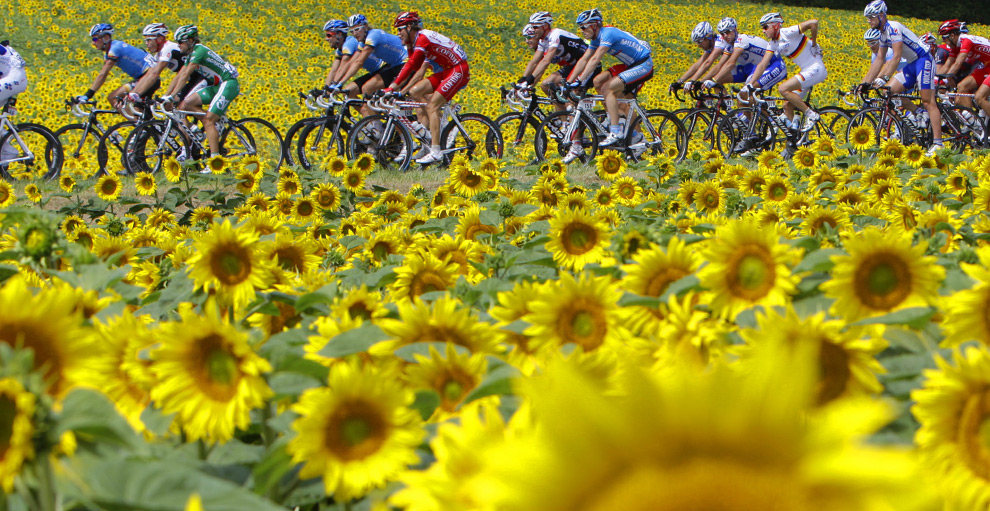
Also, it's July and I can always pretend I'm riding a stage of the Tour de France.


Sunday, June 02, 2013

Just about everything that could, has

Yesterday we went into the hive and see if the new queen had been released. Hoping that she had, the hive had excepted her and she was busy laying eggs.

What we found was the queen and about 6 other bees all stuck in the queen box.  They had chewed through the candy plug and somehow released a flap that kept them trapped inside.

The rest of the hive looks much the same. Messy, and now dead drone brood but still with lots of bees.

We shook the queen and all her cell mates into the hive, and closed it up for another week.

Saturday, June 01, 2013

Day 5: Pine nuts, pine cones, and Mount Whitney

[Remember way back in March when we went to Death Valley? This  is one of two remaining posts from that long ago vacation]


There are times when I struggle with the leave no trace take no thing ethic.   Hiking up to the Whitney Portal,  the trail littered with perfectly formed giant Douglas Fir pine cones was one of them.

At the trailhead, 3 miles and 2000ft below there hadn't been a single tree. Like most of the landscape we'd been in, it was all desert. Slightly lusher than Death Valley, but  obviously still  the 'land of little rain'. The further west and up we hiked however, and especially when the trail dipped into the Lone Pine Creek valley, the vegetation increased, and the landscape became greener. At first there were small, lone pines, and then some flowers. The view of Mount Whitney was impressive, but far off in the distance, one little peak in the ridge line of the Sierras. 

Rounding a bend in the trail and entering the creek valley we began to see snow and birds. The trees began to look more like a forest.

Scattered on the ground were numerous pine cones roughly 5 to 6 inches long. In the book Salt to Summit: A Vagabond Journey from Death Valley to Mount Whitney , Daniel Arnold mentioned how the Timbisha Shoshone lived off pine nuts. Somehow while walking and watching the birds picking at fallen pine cones I began to connect those expensive little packages of cylindrical nuts from the grocery story with the Timbisha's nuts. When we stopped for a little break I leaned over, picked up a pine cone, pealed back one of the scales, and sure enough - there was a pine nut! And it was good. S.D. was a bit reluctant to try it, but he did. Later he was a bit annoyed when I kept stopping to sample more from pine cones scattered about the trail. But the novelty of it was too much to pass.

The trail by this point, was following closely upstream beside Lone Pine Creek. The valley was narrowing and the trees were getting taller and straighter, and our views of Whitney became fewer but more spectacular. Passing the intersections with Mescle trail we entered a mature Douglas Fir forest. The trees so high and so lush, being watered by both the creek and the rainfall and the understory was clear except for the presence of Pine Cones. Foot long Pine Cones, perfect examples of the Fibonacci principle in nature, dark, nutty brown, smelling of the forests.

I picked one up, then another, and marveled at their perfection. It was then I experienced my crisis of consciousness. What loss would there be to this magnificent forest if I were to take just one? Who would know? Really, what impact would it have here? How lovely a reminder of the trip it could be back home on the mantel?  I could look at it everyday and remember this desert to forest to Mountain hike and feel...guilty?

But why would I feel guilty about taking the pine cone and not about eating the pine nut? I put the pine cone down, deferring  those deep physiological questions for another day and went back to enjoying the forest and the ever more increasingly awesome views of Mount Whitney and the Sierras.

Sunday, May 26, 2013

Last Chance Bee Hive

The new queen arrived on Friday.

S.D. waited for a break in the rain, walked the hive over to the far corner of the yard and shook all the bees out.   The idea behind it being that all the non-working bees and the existing queen, if she existed, wouldn't be able to find their way back to the hive. Then he set up the empty hive back in it's old location, for the working bees to find.  The drone comb he put in the freezer to kill the larvae.

On Saturday, we waited for another break in the rain, a break that turned out to be the only one. S.D. installed the new queen, and returned the now-dead drone comb.

If the bees can clean out the drone comb, if they accept the queen, if the queen starts laying the minute she's out, and if the other bees live long enough the raise the new brood, then we just might have a bee hive.

Tuesday, May 21, 2013

Killin' Bees

Bee'maggedon has come and it is now time for the overlords to play their hand. While we were patient beekeepers for the last month our hive has not done well. Short of flying off, they've done about as bad as a hive can do.

When we checked in on them Sunday, all we found was 'drone comb'. Pictured here it's basically a messy laying pattern, which means our queen, didn't get mated and is only laying sterile/male/drone eggs. Drones take longer to grow, supply a perfect breeding ground for mites, and do nothing but hang around the hive and eat (and breed if there is a queen in need of services). All similarities to human males aside, it's not the makings for a productive hive.  In fact once they hatch and the nurse bees dies, the hive will die.

So we're going to do a little killing in preparation for a new queen.  S.D. ordered one yesterday and by the time she gets here we hope to have all those drones, and drone cells out of there.

Saturday, May 11, 2013

Bringing Home the Pollen

All the bee people are telling us "The Nectar Flow is On".  Not exactly sure what that means but the pollen is certainly coming into the hive.  It only took a few minutes to snap this photo of two workers with loaded pollen sacks. A few days ago they were bringing in mostly green pollen but now its mostly yellow. The green was definitely from the maple trees. Not too sure about the yellow.

----

Also, this is the 'beauty shot' of the hive location at the North end of the garden. You'd think with a set up like this, they'd be the happiest of bees.

Remedial reading. What's up with the hive?

It’s been 10 days since our last hive opening and time to take another look. During Bee School we'd attended a hive opening and watched a professional look at the individual frames and tell us how the hive was faring. It was like he was reading a book. For instance one of the frames had these giant cells hanging off the bottom. That meant the hive was raising drones, as he looked around the rest of the frames he was able to read other clues that explained why.

Now it was our turn to try and read hive. And it was going to be a remedial reading at best.

We already knew the workers had been busy. We'd seen some of them returning with full pollen sacks(yes I crouched at the side of the hive entrance waiting for that brief moment when they land but before they scuttle onto the hive. Just to catch a glimpse of tiny little insect legs bulging with brightly colored pollen, mostly green). Pollen gather can be read to mean that the bees are probably feeding eggs and pupae. But the real proof would come with the hive inspection.

For this, the second hive inspection, we understood that we were to try and find the queen (again), see if she was laying eggs, spot some cells with eggs, developing larvae and capped cells (to show that she’d been laying for at least 10 days) and check that the workers were attending to their various jobs. Ideally the queen lays her eggs in consecutive cells in the lower parts of the frames forming a neat half-circle pattern, and the workers would have drawn out more comb, been feeding the eggs and creating royal jelly for them to float in.

Those round semi-circles are the larvae. Not sure if the filled
cells are pollen, capped brood, or honey.
So what did we see? In the outer 3 or 4 frames, we saw bees. Still lots of bees. No more than last time, but really not many less either. We saw lots of eggs covered in royal jelly. We saw some round larvae and maybe some capped brood? We can’t say any of this was in too organized of a pattern. I think we even saw some pollen stores. Not enough to warrant all their gathering activity, but some. Aside from the fact that the eggs, pupae, etc were roughly grouped together, and there wasn’t any discernible overall pattern, it all looked okay, at least to us.

Then we got to the inner frame. Still lots of bees, but we also saw would looked like a cells with multiple eggs and one cell, wider and more drawn out than the others. A Supercedure Cell. Multiple eggs in cells is a sign that the workers have started laying eggs. Workers can only lay sterile eggs that result in drones, and they only do that on very rare occasions when they aren’t happy with their queen. A supercedure cell means the hive has decided to raise her replacement.

The Supercedure cell.
To the left are the cells with multiple eggs
Being new to hive reading, we weren’t sure how to interpret all this. After closing everything back up S.D. called our beekeeping mentor. A quick conversation confirmed our reading. The queen had been released on schedule and she had started laying eggs. The hive was doing a good job caring for and raising their new bees and they had also, for some reason, decided they needed a new queen. Due to the presence of newly laid eggs in the outer frames, it appeared that she was still in the hive (although we again failed to find her) but for some reason our bees felt she needed to go.

 It’s going to be another two weeks before we can peek inside the hive. During that time, if we read the situation right, our bees will continue feeding and caring for all the eggs, and brood. Some of the new bees will have emerged and started their lives as good worker bees. The bees will also continue building out that supercedure cell and raising the queen. Depending on when they started, we could even have a new queen by then.


--- Sorry about the long time between entries, it’s been a busy time of year. More entries on our trip to Death Valley are also in the works. Please feel free to leave comments, I do read them, even if I get too far behind.

Sunday, April 28, 2013

Where's Waldo

For the first hive inspection you're supposed to make sure the queen has been released, and hopefully find her happily being attended by the bees. Oh, and you only want to have the hive open for a very short time. Figuring that it would be easy to check and remove the queen cage, but harder to spot the queen I was assigned the duty of hive photographer. S.D. pulled the frames, I clicked the pictures.

The opening went well. S.D. quickly found the empty queen cage, and pulled the frames so I could shot them.The bees were very calm. They really didn't pay us much attention at all, and continued drawing out comb while we were looking. At least 5 of the frames had some wax on them. All five had lots of very busy bees. Everything looked good and we had the hive closed back up in less than five minutes.

Then it was time to review the footage and find the queen. According to the books and the pros, she'll stand out because she is slightly longer than the worker bees with her abdomen extending beyond her wing tips, and she'll be surrounded by a group of attendant bees. And that's it. She doesn't even the have decency to wear a red and white hat. We've spent a good while pouring over the photos. We've seen lots of comb being drawn. Some of the cells look really deep. I think I've seen a few eggs. S.D. thinks I'm crazy. Neither of us, however, thinks we've found the queen. She could be anywhere, she could even be  underneath that mass of insect bodies.


This is the queen cage still attached.

The white stuff, in the hexagon pattern - that's wax they've added.

If you can find her - let us know!

Now we'll wait another two week before going back in to see if there are brood cells. (Baby bees).

Sunday, April 21, 2013

The Bee Whisperer

 Hive body and package
Finally, after eight weeks of Bee School, and much anticipation, the Bees are here! We picked them up at 4:00, drove them home and 'installed the package' into the hive body. Yup - not only do we have bees, but we can now talk the talk.

A 'bee package' is a small box of plywood and screening that contains 3 pounds, approx. 3000, bees and an even  smaller box containing the queen. The queen box has a candy plug in one end.  The idea being that she and the worker bees will take 2 or 3 days to eat through the candy and release the queen.  During that time they'll all get to know each other better, or at least well enough that the worker bees don't kill the queen.


Prior to the package arrival we'd spent a few nights and a day or two building and painting the hive, which consists of two hive bodies', a honey super (these are the boxes that contain 'frames' with 'foundation'), a screened base board, a slated spacer above that, a inner and outer cover. That was fun, a lot like I'd imagine shop class would have been in high school.


Once you have the hive box finished, painted and filled with foundation frames, it's ready for the package. First you place the queen-in-a-box in the hive body, and then dump the rest of the package in with her. The bees were buzzing. Literally, the sound was a loud, awesome buzz and while I was apprehensive about opening the package, S.D. just popped the top, turned the box over,  dumped, and then banged them out of the box. Most went into the hive but that still left a hundred or so buzzing around, crawling and  pooping on S.D. Bee poop is  one thing you never really think about, but they do poop, a lot, especially after being on a box for a day or two. They even pooped on the camera while I was filming the event. And they pooped all over S.D. But, angry and disoriented as they were, they didn't sting him. After a little while, they all actually went into the hive just as he told them to. Then S.D. closed it up and that was that.

The package is installed. Now we wait to see if they like their queen, and their new home.

Sunday, April 07, 2013

A Tale of Two Towns

Beatty, NV
After three nights in Beatty, Nevada we moved to Lone Pine, California. Both towns are one stoplight towns literally, each town had one stoplight. And there the similarities end.

Beatty is an experience. Yup that about sums it up. Beatty boasts two brothels. Bikinis is in a red -painted concrete block building before the stoplight. Angels, "right at the stop light, it's on the left ", is in a double-wide. Beatty is a town where a drunk outlaw cowboy re -enactor openly panhandles "private ambushes” at the local restaurant and the wait to be seated at Denny’s is 45 minutes. It's a town where the knife fight at the saloon isn't considered bad since it was between a father and a son and, "no blood was drawn." Oh and among the litter scattered about the town streets are hundreds of shot gun shells. It's an experience that I’ve had once and figure that is enough.
Lone Pine, CA

On the other hand, a mere 90 miles to the west just across the state line into California is Lone Pine, a town I very much enjoyed. Aside from hosting the trailhead to Mt Whitney, Lone Pine is a great little desert town. Just past the stoplight on the right is a backcountry outfitter. Just before the stoplight are two great restaurants where you can eat good local food without getting hit up by the locals. Not a Denny’s nor a single fast food restaurant in sight.The Park Service, aside from having great information on the local hikes also runs one of the best outdoor adventure bookstores I've ever browsed. We spent two great nights there, and I’m hoping to get back sometime soon.

Wednesday, April 03, 2013

Day 3, pt 2: We came to the desert and hiked in the snow

The Charcoal Kilns
If you ever go to Death Valley there is one area, an area off the beaten path, that you really need to visit, and a trail you need to hike.

Driving east and up the road toward the trail head we began to suspect we were entering a new area when we started seeing largish green things on the hillsides. We weren't sure; it had been a while since we'd seen things like this but as best we could recollect those things looked like trees. As the road continued climbing the green hints became bigger and soon enough we were driving through a pine forest. An especially lovely pine forest with the dark green needles accented with a thick frosting of snow. It was beautiful and totally unexpected especially considering the dry desolation we'd driven through all morning.

The trailhead for Wild Rose Peak, was also the parking lot for the Charcoal Kilns. Precisely built stone kilns that had, thankfully, only been used for only three years, but that look sculptural especially today. The stone work standing out, dark, black rock accented by snow.

The trail itself left the road to the left of the kilns, rose steeply, and then curved to the left and west rounding along the slope of Wild Rose Peak for about half a mile before cutting more determinedly upward through the center of the valley. After another mile and a half the trail topped out at the saddle. From a sheltered nook at 7000 ft. we brushed the snow off a log and sat down for a little snack, looking east over Badwater Basin the lowest point in the continental U.S., the place we'd been the day before yesterday in our shorts and tee shirts.

View looking West from the Saddle before Wind Rose Peak
But there were other unexpected, maybe even inexplicable aspects of the hike that made it so wonderful. I'm not sure if it was the sight of snow covered cactus, the sound of the wind in the themselves pines themselves, lower to the ground and broader than New England pines but I loved that hike and that place.

Writing this now I realize why I loved that desert forest, is the same reason I love and crave the desert. It's the openness. The wideness of the place. The way everything is not jumbled together like it is in more verdant climates but each item stands apart, distinct, and I can take it in one sense at a time and I am not bombarded with impressions. Don't get me wrong, I also love the immersion of being deep in a New England Forest, and walking among the Redwoods altered my perspective on just how tiny people really are, but being on the desert and the desert forest opens one out. The 'body ' expands and dissolves more into the air around it, for some reason no longer needing to hold so tight to its boundaries?
The Beauty of the Dunes

Earlier today, on our way to the mines we had walked out on the sand dunes. It had been a short visit but standing there in the sand, feeling nothing but space around me as the sun warmed my frozen New England soul the melting process had begun. Walking among the snowy but open desert forest of Wind Rose Peak all the remaining frozen bits disappeared.

Monday, April 01, 2013

Day 3, pt 1: We came to the desert and hiked in the snow

The plan for the third day was to explore the west side of the mountain range, driving through Emigrant canyon and then heading further west to Lone Pine, California. More mining, more vertigo, and another awesome hike.

Road to Skidoo
The folks who named this area Death Valley were the same folks for whom Emigrant Canyon Road was named. The same uninformed, feckless group of forty-niners who having arrived in Salt Lake City in early spring decided against Donner Pass and for the southern route. Half way along they then decided to take a right through an unexplored area. Ending up with their wagon wheels bogged down in sand without water in the middle of a desert, in July.

The road we drove down was pretty desolate in March, I can only imagine what it would be like in July. Still I strongly object to the fact that their bad judgment resulted in this beautiful area ending up with a bad name, both literally and figuratively.

One of many mine shaft openings
There is also some additional irony in the forty-niner story. They were trying to get to California for the gold. Fifty years after they passed through the canyon, gold was discovered less than 15 miles east of where they camped. We decided that the gold-mining ghost town of Skidoo would be our first exploration of the day. It being my turn to drive, we were slowly but happily bouncing down the dirt road and looking at all the mine holes when we turned a corner and the side of the road disappeared. I was driving along a cliff. Not only that, but the narrow winding, shoulderless road also now had a number of sharp blind curves. This was not to be my favorite drive and as soon as possible S.D. took over.
From in the inside out. It's cool in here.
Skidoo may have been a mining town at one point, it may once also have been a ghost town but now it was just a flat place on a mountainside littered with old mining holes, rusty tin cans and bed springs. On the crawl back down the road we stopped at a more recent mining shaft. A ladder descended too far down to see and the NPS had installed a locked metal net so visitors couldn't climb down. Still it was interesting. In an area so bleak and blistering hot for most of the year, spending the day down a dark hole might actually not have been the worst idea.

But now it was almost noon and we'd had enough of mining. We needed to get hiking and we needed it to be somewhere other than the desolate high desert plain that surrounded us. S.D. consulted the map and suggested Wild Rose Peak. I checked the trail description and agreed. By now that had become our pattern for most exploration decisions. He'd see it on the map I'd look it up in the book we'd discuss it and decide. This decision turned out to be the best of the day, one of the many high points of the trip.

Thursday, March 28, 2013

Day 2: Uber Crater, Uber Weather and a Couple of Canyons

Day two in Death Valley and we headed north for the Ubehebe Crater. The weather forecast was for cloudy skies with a thirty percent chance of rain. Back home, New England was enjoying its sixth consecutive weekend snow storm. In comparison our weather was a welcome improvement.

Ubehebe Crater, black bands near the top. One for each explosion.
The Ubehebe Crater, actually craters, as there are about five of them, are a relatively recent geological happening in the Valley. Only three thousand years ago some rising magma bubbled up into and underground reservoir. The resulting explosion blew ash all over a six mile radius, and left a series of giant holes in the ground. It was fun to figure out which craters blew first. Each crater had a different number of black bands around its rim. The one that blew first, having the most.

At about eight am we were standing on the rim of the largest looking one mile down into geological history. Hmmm did I say standing on the rim? Well that may be a bit of an exaggeration. SD was standing on the rim, I was about five feet back sneaking glances into the crater and then quickly steadying myself by looking at the gently slopping land on the other side. My fear of heights was kicking in pretty strong.

The guidebook estimated the walk around the rim to be between one and two miles depending on how many of the smaller craters you included. The weather was still cloudy but calm and relatively pleasant sixty degrees so we set off.

Titus Canyon
The thing about walking around the rim of a magma crater when you have serious vertigo is that sooner or later the rim narrows below your comfort level to places where there is only a foot or two of walkable ground between you and the sudden death of a mile long fall. That moment happened exactly half way around the crater. Being goal-obsessive in addition the height-averse I struggled with the decision of whether to turn around or continue on. S.D. came to the rescue however and offered to scout the trail ahead of me. I've found that walking behind him, focusing on his shoes rather than the drop beside them can get me through some of the trickier places including the six inch wide trail ahead. After about 100 yards the trail widened, returning to leveler ground.

Continuing on, views of the crater and the surrounding valley were spectacular as was the scene above and to the south where it was abviously raining pretty hard. The cloud cover was dark and thick and while it had seemed stationary for most of our hike it suddenly seemed to be racing north. Right to where we were. Just as we were passing the far northern rim the front hit us with thirty to fourth knot winds. Almost knocked me off my feet before I had the chance to lean into it. We scuttled back to the car and got in just when the rain smacked into the windshield.

The Mosaic Rock
The remainder of the day was spent hiking in the calm of deep canyon washes of Titus and Mosiac Canyons. Both canyons were interesting but each in its own way. Titus Canyon was notable for its scale. The walls tower above you, sometime blocking out the sky, and the Canyon extends all the way through the Grapevine Mountains. The hike up Mosiac Canyon was short but colorful. The Canyon was named for a rock formation known as the "Mosaic Breccia." Breccia is the Italian word meaning "fragments". The resulting rock is a beautiful.

It was now late, and it had been a full day. We headed back to our hotel in Beatty after our second day in the Valley.

Thursday, March 21, 2013

Day 1: Fish, History and Hiking

Fish in Death Valley? Pupfish no less. The very idea of pupfish is so adorable you wonder why they don't have their own YouTube channel. These little fish live only in the salty creeks and ponds of Death Valley, and they were something we really weren't expecting.

Salt Creek: Home of the Pupfish
Like a lot of National Parks, Death Valley has a number of roadside easy -to-access-point -of-interest stops with interpretive displays and very little walking. Our plan was to check all of those out, the pupfish at Salt Creek being the first stop, get the lay of the land, its history, geography and geology. We also wanted to get in our first good hike, hopefully about mid-day at the Golden Hills.

After the Pupfish, which we never saw but it was a nice hike around a running creek that was quite salty, (SD tasted the water and declared it more salty than seawater) we headed south to the Harmony Borax Mine Historical Site. You can't visit the area without talking about mining. Old mine shafts, abandoned mining towns, assorted historical sites, and even a few working mines cover the area. Even before entering the Park we'd stopped at Rhyolite, an abandoned mining town outside Beatty, Nevada. Walls stood alone in fields, rusted cans piled up along the side of old roads, cave openings high in the hills were all the remained of old mine shafts. The graveyard, still accepting occupants, was particularly cool. Of all the abandoned mining towns we'd see in the next few days it was the only graveyard.

Borax mining, on the other hand, didn’t require mine shafts. Miners scrapped the borax off the flats, refined it and shipped it out in huge wagons pulled by twenty mules. The Harmony Borax Mine Historical Site had two of the wagons and a water tank and they really were impressively large.

A mile south of the Borax mine site was the Furnace Creek Interpretive Center. It was our first encounter with the bus tourist. A bus-full of people who are driven from stop to stop, descend on a site, and then as if by magic disappear back into the bus and leave. But the Center was also loaded with great displays and we spent about an hour learning history and geology.

After a full morning of touring and studying we were ready for some hiking but when we arrived at the parking lot for the Golden Hills it was packed and there wasn’t a space available. According to the guide book it was a spectacular but narrow trail.

Craving a bit of desert solitude we drove on, turning left onto a side road about two miles south. That road went east for about a mile then abruptly stopped. Other than a no camping sign there were no signs but a faint path left the road, curved to the east south east and into a canyon wash. I’d read that like Utah, most of the Death Valley trails were walks up canyons and that really you could just pick any canyon and walk up it. With a dedicated parking lot I figured this was as good a canyon as any.... after the hike I suspect it was better than most.

It's hard to see, but the rocks further down are green and red.
The wash, or the sand and gravel that wash out of the canyon opening was about half a mile long. After that the canyon walls narrowed quickly. We twisted up and south and south east under smooth walls of white, red and sometimes green rock. Looking at the topographic map it looked like our canyon was running into the Artist Hills, an area renowned for its colorful layered rocks. The further in we hiked the more colorful the rocks became and the closer we through we were to topping out at a pass. Two times we explored side canyons hoping to reach an overlook. But it’s funny in these canyons, you are hiking up but at the same time you are hiking in. They rarely top out. Like the little side canyons most end at a high canyon wall or a "fall", a large rock fall inside the canyon that blocks any further progress. We hiked in for an hour and a half, and although the temptation to go around one more corner was strong, we eventually turned around.

It had been a great first day, from pupfish to historical sites to a great hike, the desert was starting to work its magic.