There was a time when I'd easily drive to Michigan and back for the weekend. A time when 14 hours behind the wheel was like a trip to the corner grocery store. My road food of choice was peanut m & m's (for the protein) and diet coke (so I didn't gain a lot of weight for all the sitting and peanut m & m's). Highs and low of the journey included roadside stops and channel surfing. Sometimes there would be a great town, sometimes they were downright scary, sometimes you'd get a stretch of great tunes and sometimes, the radio too could be a bit scary.
But times change. The airplane was invented, the bicycle became a better option for around town, the train for going to work. I sold the car and started flying to adventures. The change expanded the range but also changed the nature of the adventure. Peanut m & m's were replaced by Starbucks salads (and who can say which is the best nutritional choice.), layovers were highly researched and rarely surprising, music was pre-loaded on my phone, and never, ever, could there be any sing-alongs.
This week, however I return to the road. In one of those unusual circumstances where the necessary destinations / airport locations / travel time configurations lends itself not to flying but rather to road tripping.
Over the course of 7 days we'll drive a minimum of 31 hours. Stopping along the way at places known and unknown. Visiting family, seeing new sights, grimacing at gas station rest rooms, drinking new craft beers, peanut eating m and m's and cranking up the tunes as we roll west to Pennsylvania and then on to Michigan, and home by way of Canada and Niagara falls.
It's been 10 years since the last trip. I do hope it's as fun as I remember.
Tuesday, August 19, 2014

Sunday, July 20, 2014
The Bee as Metaphor
----
How doth the little busy Bee
Improve each shining Hour,
And gather Honey all the day
From every opening Flower!*
-------
It's not a top twenty hit but it does go a long way to describing bees. They are busy all the time! Busy as bees, as the metaphor states. Bees, in face, are the object of many metaphors.
Take the Worker Bee. She is both a capitalist and a communist metaphor for the perfect worker. They are up first thing in the morning. No burning daylight for a bee. When the dawn is slow, or a bit chilly they will crowd up on the hive board, just inside, waiting for the second the temperature shifts to flying weather.
 |
| The collective minding the queen |
And then there is the drone, or male bee. While there are no current metaphors for the bee who's only purpose is to have sex with the queen and die, there are a number of related meanings. In the 16th century drone was given the figurative sense of 'idler' or 'lazy worker', as male bees make no honey. In our time drone is most commonly used as the name of an unmanned aerial vehicle. It's a connection that is unclear. Not sure how one gets from the idea of a male bee flying around looking for sex to a brainless piece of equipment. .. oh I think I get it now.
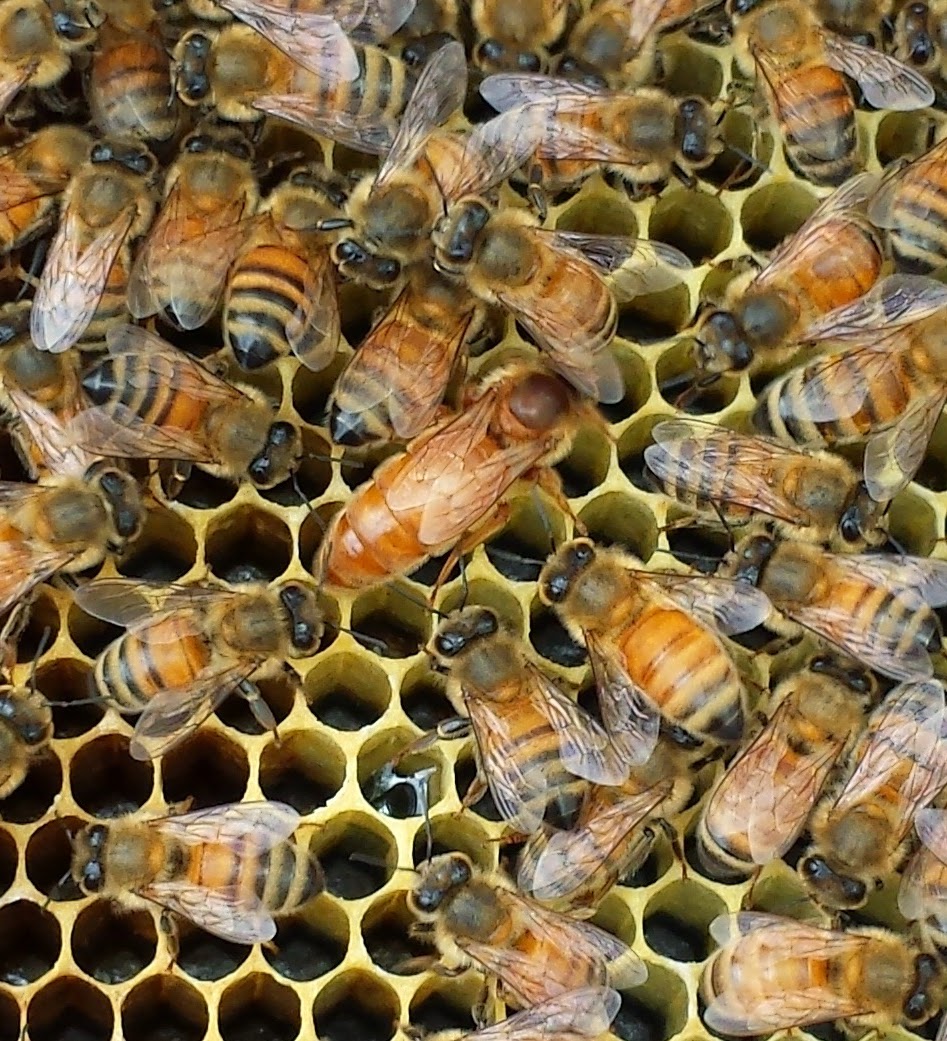 |
| Don't want to be a Royal |
The most unflattering metaphor that relies upon the functioning of whole hive is that of the Borg. A collection of species that have been turned into cybernetic organisms functioning as drones of the Collective, or the hive. Resistance to joining the Borg is futile, and while there is a Borg queen, they do not do anything useful like pollinate flowers produce anything as wonderful as honey. Upon that premise, I think the metaphor should be disallowed.
The good news is the Hive is also the foundation of many good metaphors and has been co-opted by artist co-operatives, farming co-ops,states (Utah) and even bike shops to symbolize a collaborative group of individuals working for the common good.
But really, they're just bees, and all the metaphors are human projections on an insect with an elaborate social survival strategy...that is fun to watch.
*Against Idleness and Mischief
Thursday, July 03, 2014
Public Service Annoucement for Walkers, Runners and Bicyclists
 With the Holiday weekend approaching and the summer vacation season upon us I'd like to take a break from the regular adventure posts to highlight ways NOT to be adventurous. In other words, walk, run and bike safely!
 Really it's very simple.
Walkers and runners:
1. Walk and run on the sidewalk where available
2. If there is no sidewalk, walk and run facing traffic, on the left side of the road
Bicyclists:
1. Ride in the road. Riding on the sidewalk is dangerous because sidewalk site lines were not set up with bicycle speeds in mind
2. Ride with traffic, on the right side of the road.

The consequences of doing it wrong are serious, and the danger so obvious, and the obliviousness to the danger so flagrant that I am tempted to post one or more of the following signs, or pass out flyers. Not sure which would be more effective/obnoxious.Votes, comments and suggestions are appreciated.

Sunday, June 29, 2014
The Queen is Dead. Long Live The Other Queen.
S.D. pulled the queen cage out from the second hive. "That's strange. She's still in there" he said. It had only been a week and sometimes it does take longer for the queen to emerge, but we had just opened the other hive and found not only that the queen had been released but that she had already laid eggs. "I think she's dead."
Damn.
The chances of getting another queen at this point in the season were highly improbable. If we left the hive queenless for too long the workers might start laying eggs and then they'd be totally useless. We both looked at the other hive and had the same thought. "Guess we're going to have to combine
them."
Combining hives was something we'd only heard about. When a colony is weak or queenless the best thing to do is combine them with another, stronger, queened hive. Basically we understood that the way to do that was to take the cover off the strong hive, put a piece of newspaper over it then put the weaker hive box (with the hive) on top. By the time the bees have eaten through the paper, they will have adjusted enough to each other's scent that they won't try and kill each other. That was the theory. We'd never actually seen it done.
S.D. wanted to do it right then and there and see what happened, I wanted to research the best way to do it first. (Can you tell who's the librarian and who's the scientist?). After consulting the books and the web, hunting around for newspaper and settling for last weeks Stop and Shop sales flyer, we combined the hives - just as S.D. had originally proposed.
And all was quiet. The bees in the top hive didn't really appear to be doing much and the bees in the bottom hive appeared to be going about their normal business. It was one of the many times a hive cam would be nice. As it was we could only imagine the action around the newspaper barrier as all the angry (?) bees gathered below and above it, buzzing loudly, fanning, and trying to chew through the paper with their tiny mandibles. Or maybe they were reading up on the weekly specials? Hard to know without the webcam.
As it was, we spent the week trying to decide if the pile of dead bees in front of the hive had risen dramatically, and looking for pieces of newspaper to be thrown out.
The next Sunday we opened the hive. There were plenty of bees in the top hive, and there was a very large hole in the newspaper. Success, the hives had combined! Down below we found capped brood, larvae and the Queen! She is a big brown one, and she is big. They'd told us she would be easy to spot and there she was. It took two packages, but it looks like we had one big healthy hive.
Damn.
 |
| The newspaper method |
them."
Combining hives was something we'd only heard about. When a colony is weak or queenless the best thing to do is combine them with another, stronger, queened hive. Basically we understood that the way to do that was to take the cover off the strong hive, put a piece of newspaper over it then put the weaker hive box (with the hive) on top. By the time the bees have eaten through the paper, they will have adjusted enough to each other's scent that they won't try and kill each other. That was the theory. We'd never actually seen it done.
S.D. wanted to do it right then and there and see what happened, I wanted to research the best way to do it first. (Can you tell who's the librarian and who's the scientist?). After consulting the books and the web, hunting around for newspaper and settling for last weeks Stop and Shop sales flyer, we combined the hives - just as S.D. had originally proposed.
 |
| Can you see her now? |
As it was, we spent the week trying to decide if the pile of dead bees in front of the hive had risen dramatically, and looking for pieces of newspaper to be thrown out.
The next Sunday we opened the hive. There were plenty of bees in the top hive, and there was a very large hole in the newspaper. Success, the hives had combined! Down below we found capped brood, larvae and the Queen! She is a big brown one, and she is big. They'd told us she would be easy to spot and there she was. It took two packages, but it looks like we had one big healthy hive.
Monday, June 16, 2014
The 2014 Bee Saga
June finds us, once again, sitting on the back deck watching bees flying in and out of their hive. We know we're a little bit ahead of where we last year, but we're not really sure how far, and we also know we're lucky just to have bees at all.
Last winter was a tough one for all bees in New England. With a hive survival rate of only 30% we didn't feel so bad about loosing our hive. We certainly didn't tell everyone that we lost it even before the first snowfall but with overall survival rates so low, it really didn't matter.
We also started the spring feeling pretty smug as we had 2 packages on order.With everyone trying to start up 70% of the hives, demand was high. If you hadn't already ordered your packages by February, they were going to be hard to find.
And so it was one fine morning in early May that we called to confirm our package pickup. Ken, the bee keeper who had sold us the nuc, had included our order with his. His supplier lived in Vermont but met up with Ken in Springfield, Mass, during his return trip from Georgia. On the day Ken was supposed to meet with his supplier, and we subsequently would meet up with Ken, we called him.
"Umm, there's been a problem with the pickup you say?"
"Yes," Ken answered. "The guy's truck has broken down in New York so I didn't meet him. I'm not getting the bees this year"
"Umm. Can I go meet him in Vermont. We need the bees, and everyone else is already sold out"
"Sure," he replied, and gave me the number
I called the guy. Apparently the truck was dead, his wife was coming to get him in their car. The wife wouldn't allow bees in the car, and he sold the packages to a guy who ran a landscaping business in Connecticut.
"Umm, can I have the number for the landscaping guy?" I asked. I needed bees!!!
"Sure," he replied, and gave me the number.
I called the guy. The bees were sold.
Noooooooo. I couldn't imagine how dull the backyard would be without the bees. How un-busy.
And then I recalled an email that had come through the Essex County Beekeepers Association list a few weeks ago. It was a vague email. Someone was compiling a list of people who needed bees because someone might have a line on some packages. With nothing to loose, I contacted the someone who was making the list.
"Yes" they replied, "We're probably going to pick up a truckload in Georgia next week."
"Great. I'll take two packages!" The price was double that of normal packages, but some of the money went to some group that was helping bees do something or other. Whatever. We wanted bees. "Where will I need to go to pick these up?" I asked next. Having been willing to go to Vermont, and Connecticut to get bees, I assumed this would require a similar trek. The guy gave me a Boston address.
Monday afternoon I left work early, walked three blocks and met S.D. coming out of warehouse carrying two, very angerly buzzing packages of bees. Their anger all the more justified when you noticed that a good number of them lay at the bottom of the package, dead.
S.D. sprayed the packages with some sugar water, which quieted them, placed them in paper bags and seated belted them into the back. Sensing time was of the essence, we needed to get out of Boston before rush hour, and get the bees into a better environment as fast as possible, we hightailed it up to the North Shore.
Once home, it only took about 10 minutes to suit up, set up the hives and begin installing the packages. With so many bees dead, I was anguesting over the fate of the queens. As we had learned, hives without queens are really just an exercise in existentialism, and I wasn't up for another year of that.
S.D. carefully pulled the first queen cage out. We looked, and she moved! She was alive!! He shook the bees into the hive, where they gladly went, removed the plug from the queen cage and installed it in the middle frame.
He then installed the second package just the same. We closed up the hives, and installed the sugar water feeder.
From our observation posts on the deck we watched the orientation flights begin. It was good to have bees in the yard again, and there was a chance that they'd do okay. We had two queens, and we had bees. A week later we'd check to see if the queen had been released and if she had begun laying eggs. The cycle had begun again.
Last winter was a tough one for all bees in New England. With a hive survival rate of only 30% we didn't feel so bad about loosing our hive. We certainly didn't tell everyone that we lost it even before the first snowfall but with overall survival rates so low, it really didn't matter.
We also started the spring feeling pretty smug as we had 2 packages on order.With everyone trying to start up 70% of the hives, demand was high. If you hadn't already ordered your packages by February, they were going to be hard to find.
And so it was one fine morning in early May that we called to confirm our package pickup. Ken, the bee keeper who had sold us the nuc, had included our order with his. His supplier lived in Vermont but met up with Ken in Springfield, Mass, during his return trip from Georgia. On the day Ken was supposed to meet with his supplier, and we subsequently would meet up with Ken, we called him.
"Umm, there's been a problem with the pickup you say?"
"Yes," Ken answered. "The guy's truck has broken down in New York so I didn't meet him. I'm not getting the bees this year"
"Umm. Can I go meet him in Vermont. We need the bees, and everyone else is already sold out"
"Sure," he replied, and gave me the number
I called the guy. Apparently the truck was dead, his wife was coming to get him in their car. The wife wouldn't allow bees in the car, and he sold the packages to a guy who ran a landscaping business in Connecticut.
"Umm, can I have the number for the landscaping guy?" I asked. I needed bees!!!
"Sure," he replied, and gave me the number.
I called the guy. The bees were sold.
Noooooooo. I couldn't imagine how dull the backyard would be without the bees. How un-busy.
And then I recalled an email that had come through the Essex County Beekeepers Association list a few weeks ago. It was a vague email. Someone was compiling a list of people who needed bees because someone might have a line on some packages. With nothing to loose, I contacted the someone who was making the list.
"Yes" they replied, "We're probably going to pick up a truckload in Georgia next week."
"Great. I'll take two packages!" The price was double that of normal packages, but some of the money went to some group that was helping bees do something or other. Whatever. We wanted bees. "Where will I need to go to pick these up?" I asked next. Having been willing to go to Vermont, and Connecticut to get bees, I assumed this would require a similar trek. The guy gave me a Boston address.
Monday afternoon I left work early, walked three blocks and met S.D. coming out of warehouse carrying two, very angerly buzzing packages of bees. Their anger all the more justified when you noticed that a good number of them lay at the bottom of the package, dead.
S.D. sprayed the packages with some sugar water, which quieted them, placed them in paper bags and seated belted them into the back. Sensing time was of the essence, we needed to get out of Boston before rush hour, and get the bees into a better environment as fast as possible, we hightailed it up to the North Shore.
 |
| A package for every hive |
Once home, it only took about 10 minutes to suit up, set up the hives and begin installing the packages. With so many bees dead, I was anguesting over the fate of the queens. As we had learned, hives without queens are really just an exercise in existentialism, and I wasn't up for another year of that.
S.D. carefully pulled the first queen cage out. We looked, and she moved! She was alive!! He shook the bees into the hive, where they gladly went, removed the plug from the queen cage and installed it in the middle frame.
He then installed the second package just the same. We closed up the hives, and installed the sugar water feeder.
From our observation posts on the deck we watched the orientation flights begin. It was good to have bees in the yard again, and there was a chance that they'd do okay. We had two queens, and we had bees. A week later we'd check to see if the queen had been released and if she had begun laying eggs. The cycle had begun again.
Wednesday, May 07, 2014
Back in the Mountains - Grizzly Peak and Mt McLoughlin
S.D. and I don't argue all that much but we often do have disputes over who is right about something or other. Topics can range from which direction we should take (I'm usually right), when is the best time to do something (S.D. usually wins - not necessarily because he's right), and on this vacation, what mountain is that (probably 50/50 on this one, not that anyone is keeping score).
On the third day of vacation we drove from Bend to Ashland, Oregon. Driving south along the eastern edge of the Cascade Volcanic arc, west over the pass at Crater Lake, then south again, we had lots of opportunities to play What Mountain is That?
S.D. correctly identified Mt.Theilsen and couple of others. Rolling into Medford, I looked East and identified Mt. McLoughlin. It's really hard to miss actually as it's snow covered peak dominates the valley.
Grizzly Peak Trail
The next day we set off on hike, not up Mt McLoughlin, but up a trail that promised fine views of the mountain and also of the Ashland Valley. The Grizzly Peak trail is a 5.4 loop hike over and around a fire-balded peak just North of Ashland. The trailhead is on the well-wooded East side of the peak. You can only catch occasional glimpses of McLoughlin, but enough that you know it's there.
Hiking over to the West side of the peak the trail enters an area that had recently been burned over
during a forest fire. The bare burned trees still stand, even as the spring wildflowers carpeted the ground. It was hard to decide whether to look down at the all the wildflowers or up at the view. Below us was the town of Ashland. Mt. Ashland rose just above it and to the left. The sky was blue, the sun was shining and for two recent escapees from the Longest-Ever-Winter-In-Massachusetts-History, it was glorious! It was everything we wanted from this vacation and more...and it really didn't mater which mountain was which.

When we arrived back at our little cottage on the hill just a half mile south-west of Ashland I recognized the peak just to our North as Grizzly Peak. (S.D. didn't concede for another day)
On the third day of vacation we drove from Bend to Ashland, Oregon. Driving south along the eastern edge of the Cascade Volcanic arc, west over the pass at Crater Lake, then south again, we had lots of opportunities to play What Mountain is That?
 |
| View South over Ashland |
Grizzly Peak Trail
The next day we set off on hike, not up Mt McLoughlin, but up a trail that promised fine views of the mountain and also of the Ashland Valley. The Grizzly Peak trail is a 5.4 loop hike over and around a fire-balded peak just North of Ashland. The trailhead is on the well-wooded East side of the peak. You can only catch occasional glimpses of McLoughlin, but enough that you know it's there.
Hiking over to the West side of the peak the trail enters an area that had recently been burned over
 |
| Kalmath Fawn Lily |
When we arrived back at our little cottage on the hill just a half mile south-west of Ashland I recognized the peak just to our North as Grizzly Peak. (S.D. didn't concede for another day)
Sunday, April 27, 2014
Back in the Mountains - Bend, Oregon

Coffee Bikes Beer
Yes, I could live here
In a little town called Bend
Where the volcanic peaks of the Cascades meet the high plains
Where a 900 ft cinder cone
Rises up through the center of town
And locals and visitors circumambulate
To see for miles around.
-----------------------------------
Driving south from Mt Hood we crossed over to the back side of the Cascades rain shadow and entered the Oregon High Desert. Where only an hour before we had been driving through dense forests dripping with moss, we were now driving across a treeless plain. Where we had only been able to catch an occasional glimpse of a mountain, we could now see the whole line of them running from North to South.
After about an hour, we then arrived at our destination, the little town of Bend. If you ever go to Bend be sure your first stop is at the Information Office. We arrived at 4:50, ten minutes before closing. Expecting to be quickly shown a map or two and pushed out the door, we were instead greeted by the friendliest, most helpful, most Bend-loving person imaginable. She not only gave us a personally annotated map of all the spots to see in Bend, she also gave us the Ale Trail map (11 breweries

Leaving the Information Office at 5:30, we headed off on a quick walk through town and down to the park along the Deschutes River. And that's when we saw the sign, "Coffee Bikes Beer"and I knew I was going to really like this town. We continued our stroll, continued admiring the coffee shops, and the variety and quantity of bikes.
We also began debating our beer options. Neither of us felt up for visiting 11 breweries, even if they were in walking distance. We were more in the mood for visiting one, having a good dinner, and sampling just a few of the local brew. This being our first trip to Bend, we decided that the only real option was the Deschutes Brewery. After all, could you really go to Bend without going there?
After enjoying a flight entirely of IPAs and an Elk burger, we agreed we'd made an excellent choice, and then headed to our B and B for a nice quiet night in a room just outside town and along the river.

 The next morning, before heading South to Ashland we drove back to town and circumambulated the 900 ft cinder cone both so we could get in a hike before the long drive and because the information lady had told us there was a plaque on the summit that described the mountains. Looking to the far North we could just make out Mt Hood. Due West was Mount Bachelor, and to the South Mt Thielsen rose all jagged and beckoning. We'd be driving past it in less than 3 hours.
 Saturday, April 19, 2014
Back in the Mountains - Mt Hood
 The first thing I did after waking up in the Portland airport hotel was open the window blinds and find Mt Hood. It took only a few seconds even though it was over fifty miles south and partially obscured by clouds. Even from within the hermetically sealed (even though the window did open, a rarity in hotels, the room was across the street from the airport runway, we kept it closed.) hotel room I could feel the mountain.
The second thing we did (after getting S.D. up and moving and getting breakfast) was rent a car and start driving south on RT 26, straight to Mt Hood.
The third thing we did, only about an hour later, was hike up the Flag Mountain Trail to an overlook with great views of Mt Hood. (Still over 15 miles away). By then the clouds had all cleared and sun's reflection off the snow was almost blinding. But standing in the cool, dripping wet of a Pacific rain forest mountain top you were still drawn to the cold, commanding presence of that Mountain.

 And the effect of that is that is that often, wherever you are in Oregon, the mountains are there too. You might be in the city, on the ridge of a small rain forest peak, or down in the high mountain desert, but wherever you are, you can see, and feel, something big nearby, something that is a mountain.
Thursday, April 17, 2014
It Begins!
 | |
| Curious, "peeing plane" cup on Alaska Air. |
 |
| Playground - Spring 2014 |
The next morning S.D. and I took a taxi to the train, to the subway, to the bus, to the plane. 6 hours later I still felt that summer-vacation style release. It had been over a year since we'd gone on a serious vacation and now I was in Oregon. The Cascade range from Mt Hood to Mt Shasta was ours to explore for the next week, and we were going to do it in style!
Monday, March 31, 2014
Oregon: Pre-adventure research
In one week we're going to Oregon!
Flying into Portland then off to Bend. After two days there we continue on to Ashland where we'll be staying for another four days before looping back to Portland.
So lets talk about the weather. As I write this its March 31 and 22 degrees. We're expecting 3-5 inches of snow tonight. In Bend the temperature is 45 and its 56 in Ashland. And that's all I'm going to say about that.
Bend. One doesn't associate Oregon with desert but apparently a good deal of the state, the entire part that lies east of the north south Cascade Mountain Curtain gets very little rain and is high desert. Bend is home to the Deschutes River, the Deschutes River Brewing Company, and some great hiking trails. I only hope two days is enough time.
 Ashland. Ashland is home to the Oregon Shakespeare Festival and one of the favorite refueling stops for thru-hikers on the Pacific Crest Trail. Aside from the usual visitor guides and Arcadia Press picture books, those were the types of books I was expecting to find when researching Ashland. However, when looking for books, I soon discovered many more interesting things about Ashland,
1. It is home to Blackstone Audio, the largest independent audiobooks publisher in the United States, and a company who's audiobooks are heavily purchased by my library. There's a great interview with the founder George Black on the founding, why they moved to Ashland, and why they support the Jackson County Library: http://youtu.be/buXWlUI5Eyc
2 It is also home to author Scott Blum , and the setting for his three book new-age life-transformation series.
3. It was named as Outside Magazines top 10 towns in 2012:http://youtu.be/8U7liD6Qg5c
4. It has a "pumpkin carrying hippy" who rides a bicycle for a mayor: http://youtu.be/WoOiAubC_qk
Flying into Portland then off to Bend. After two days there we continue on to Ashland where we'll be staying for another four days before looping back to Portland.
 |
| Sun in Bend |
So lets talk about the weather. As I write this its March 31 and 22 degrees. We're expecting 3-5 inches of snow tonight. In Bend the temperature is 45 and its 56 in Ashland. And that's all I'm going to say about that.
Bend. One doesn't associate Oregon with desert but apparently a good deal of the state, the entire part that lies east of the north south Cascade Mountain Curtain gets very little rain and is high desert. Bend is home to the Deschutes River, the Deschutes River Brewing Company, and some great hiking trails. I only hope two days is enough time.
 Ashland. Ashland is home to the Oregon Shakespeare Festival and one of the favorite refueling stops for thru-hikers on the Pacific Crest Trail. Aside from the usual visitor guides and Arcadia Press picture books, those were the types of books I was expecting to find when researching Ashland. However, when looking for books, I soon discovered many more interesting things about Ashland,
1. It is home to Blackstone Audio, the largest independent audiobooks publisher in the United States, and a company who's audiobooks are heavily purchased by my library. There's a great interview with the founder George Black on the founding, why they moved to Ashland, and why they support the Jackson County Library: http://youtu.be/buXWlUI5Eyc
2 It is also home to author Scott Blum
, and the setting for his three book new-age life-transformation series.3. It was named as Outside Magazines top 10 towns in 2012:http://youtu.be/8U7liD6Qg5c
4. It has a "pumpkin carrying hippy" who rides a bicycle for a mayor: http://youtu.be/WoOiAubC_qk
Sunday, February 02, 2014
Learning to Bear

Once while hiking up Tecumseh I saw a fox on the trail and for some reason thought it might be rabid. My immediate response was to push S. D. out in front, between me and the rabid fox. The fox casually sauntered off the trail, S.D. was less than amused.
Two hikes later, we were walking up the Wilderness Trail, high dirt bank to the left, Pemigewasset River to the right when S.D. shouts "Bear!" and pushed
me out in front, between him and the bear. I panicked. What was coming up the trail sure did look like a bear. The blood drained away but just before I passed out I noticed the pack on the bear's back and a low chuckle coming from behind me. It was only a hiker, admittedly a very large hiker, but a bearish enough hiker that S.D. thought to extract his revenge for the fox incident.
 Since then I've been even more worried about meeting a bear. Freezing, while meeting wild animals is recommended in some situations, but not
the recommended reaction when meeting a bear. I have often thought
research on the topic would be useful but haven't been able to get
past the existing literature with names like and Beyond the Bear: How I Learned to Live and Love Again after Being Blinded by a Bear and Bear Attacks: Their Causes and Avoidance (revised edition) Of course I've read the famous, classic and darkly humorous bear section in A Walk in the Woods: Rediscovering America on the Appalachian Trail (Official Guides to the Appalachian Trail) but that only helped me laugh off the situation.
Since then I've been even more worried about meeting a bear. Freezing, while meeting wild animals is recommended in some situations, but not
the recommended reaction when meeting a bear. I have often thought
research on the topic would be useful but haven't been able to get
past the existing literature with names like and Beyond the Bear: How I Learned to Live and Love Again after Being Blinded by a Bear and Bear Attacks: Their Causes and Avoidance (revised edition) Of course I've read the famous, classic and darkly humorous bear section in A Walk in the Woods: Rediscovering America on the Appalachian Trail (Official Guides to the Appalachian Trail) but that only helped me laugh off the situation.And then I pulled Out on a Limb: What Black Bears Taught Me about Intelligence and Intuition off the library shelf. Written by Benjamin Kilham, a guy who has been raising and releasing orphaned black bear cubs in New Hampshire for over 20 years, Out on a Limb, has some very comforting thoughts for the average hiker. Basically, even when hikers do the exact opposite of what they should do, bear attacks are very rare. It also has a very useful chapter on how hikers should behave.
But even more than offering basic advice for hikers, Kilham talks bears. He knows bears. Where they hang out, what they eat, why you shouldn't bother them while they're eating, who they hang out with. He even describes how they communicate. "MMMM" is good, growls and huffing are not. If a bear is huffying at you with their ears back, get out.
 I confess I am more concerned about food. It seems if you have food, a
bear can smell it no matter where it is. If they're hungry and they
want it, they'll get it. The important point here is not to be with your food. Hang it high in a tree if you want, but hang it (all of it) away from your tent.
I confess I am more concerned about food. It seems if you have food, a
bear can smell it no matter where it is. If they're hungry and they
want it, they'll get it. The important point here is not to be with your food. Hang it high in a tree if you want, but hang it (all of it) away from your tent. After reading the book, I'm still not looking forward to a bear encounter but at least now I have a better sense of what to do. Stand tall, but not raise my arms and attempt to look bigger and more threatening, walk confidently forward if that will not take me into the bear's territory, or away if necessary.
And remember, as S.D. always says, I don't have to be able to out run the bear, only him.
Saturday, January 25, 2014
Snowburbia
 |
| An actual morning-after photo |
Except S.D. and I. We are the holdouts in this neighborhood of crisply-edged driveways. We still shovel. Even though it takes longer, even though it may not be as pretty, we still shovel because, well, I like to, SD isn't so sure that he likes it but he's not going to buy a snowblower. We also, coincidentally, have the longest driveway, and being on a large corner lot, the longest stretch of sidewalk.
This confluence of maximum clearable surface, the time difference inherent in snow shoveling vs snow blowing, and the kindness of neighbors, often makes the hour after the snow ends a bit of a race. You see, our neighbors, all 6 snowblowing enthusiasts that they are, are also extremely nice, and helpful, and we can shovel only so fast.
 |
| All shoveling here. |
Meanwhile S.D. and I have been innocently, and leisurely shoveling, enjoying the crisp air, the clean sound of the shovel slicing through powder, the muscular flick of the wrist that flows the snow over the ever-growing bank, when suddenly there is a offer of "Do you need any help?", the revving of a gas engine and boom, all the snow is gone.
Monday, January 20, 2014
The Price of Honey
 |
| The Jar Of Honey |
Honey, like other agricultural products is priced via supply and demand. As such it's priced relatively high, the supply being limited in regards to demand. If however you were to price honey, especially our little jar of honey, based on production cost, it would be worth more than it's weight in gold.
Yes we now have honey! No more bees, but one entire frame of honey. During the recent January thaw we checked our bees only to discover that they had frozen to death. Most likely because there were not enough of them to maintain the 70 degrees necessary for survival. They did have plenty of stored honey so that wasn't the problem. They just couldn't stay warm enough to get to it.
 |
| The frame with honeycomb |
Honey harvesting is described as a simple process of removing the wax cappings off the honey combs and extracting the honey using a centrifugal abstracter, basically a bucket onto which you load the frames and spin them around until the honey flows out the spout at he bottom. We didn't have an abstracter but we did have time and since we were only going to harvest one frame we figured we could tilt the frame up and let the honey drip down.
 |
| Cappings removed and the drip begins |
Saturday, September 21, 2013
Crash and Ride
 |
| Not me - but a close resemblance to my crash |
It vaguely occurred to me that this wasn't good and that perhaps I needed help. I knew S.D. had just had his left hip replaced two weeks ago and couldn't drive but that he would somehow know where I was. I called Christine and asked if she could pick him up and come get me. I told her to tell him that I was on the "Apple Street Loop". He'd know what that meant. I sure didn't. I asked if it would take her a long time to get to our house. It was only then when I realized I should have known where she lived and for that matter where I lived and how long it would take for her to get to S.D. that I started to panic. She talked me down. I relaxed and closed the phone.
Then I was talking to S.D. on the phone, telling him that Christine was coming.
Then a cyclist rode by and asked if I was okay. I shook my head. "I don't think so " I replied. But I stood up moved around a little. There didn't seem to be any pain. Nothing broken, only my elbow bleeding all over everything. I sat back down on the sidewalk. I told the cyclist my name and address.
A car pulled up. The driver asked if I was okay. "I don't think So " I replied. The car drove off. A guy got out of a car that suddenly was there on the side of the road. He bandaged my arm and started talking on a phone.
Then there was another guy. He lived in the house behind me.
Then my truck drove by, did a u-turn in the middle of the road, and pulled over. S.D. limped out on his cane proclaiming "I couldn't wait for Christine, I tried it and I could drive. " Apparently he's not good at waiting. As Christine was to hypothesize when she arrived at our empty house only five minutes after my call, the white knight syndrome had kicked in and regardless of his non-functional hip he had driven off to save me. Apparently I had managed to tell him I was on School Street, and he'd decided to drive the length of it and find me.
Then an ambulance was on the side of the road. "We're taking you to Beverly Hospital." They told me. That's where S.D. had his hip surgery so I knew it was a nice hospital. Still had no idea where it was or what it would take to get there from here. But at this point, a Hospital seemed a good idea. I was feeling tired and dimly knew sleeping wasn't a good idea.
 |
| Not sure what you're supposed to do if you see this while riding |
Thank you bike helmet!
S.D. sent me an article a few weeks later about how 75% all of bike accidents only involve the rider (and a curb, parked car, pothole, etc). Apparently there are lots of folks just like me who fall off their bikes at high rates of speed. What is truly remarkable however is the number of folks who help those unwitting cyclist.
Thank you S.D. and Christine! Thank you anonymous cyclist, car driver and guy next-door! Thank you bike helmet manufactures and bike helmet advocates! Thanks to all of you I (and lots of others) can crash and ride.
Monday, July 15, 2013
We have not yet begun to beekeep

 We did what we had to do to get a healthy hive. We got a new one. We posted a "hive or nuc wanted" message on the Essex County Beekeepers listserv and an awesome beekeeper from Billerica replied. Ken took us out to one of his beeyards (pictured left) where we sorted through a three box hive. He selected ten frames, one with honey and the rest with brood and honey, and gently placed them into our hive body. All of the frames were full of bees and although she was elusive, Ken located the queen and pointed her out to us. She's a big serious looking queen with a black abdomen and a long black body.
We strapped the hive tightly together, loaded it into the truck, drove our new hive home and settled it into the garden.
We will not give up the hive.
Sunday, July 07, 2013
Adventure(s) Update(s)

The good news - I'm training to ride the Blazing Saddles Century, August 17th. (Route pictured on the left)
The bad news - S.D., after suffering with a lot of pain, and losing almost all range of motion in his hips is now waiting to be scheduled for hip replacement surgery. If you want to perform virtual hip surgery, and who doesn't! check out EdHeads Virtual Hip Surgery.
 Over the next 6 months or so he'll have both hips replaced and hopefully (good news) we'll be back bicycling and climbing mountains together next spring. The surgeries and recovery process do promise to be adventures in and of themselves but I'm not sure how much I'll be writing about them. The adventures of being the primary care person for one such as S.D. may not make for great reading.
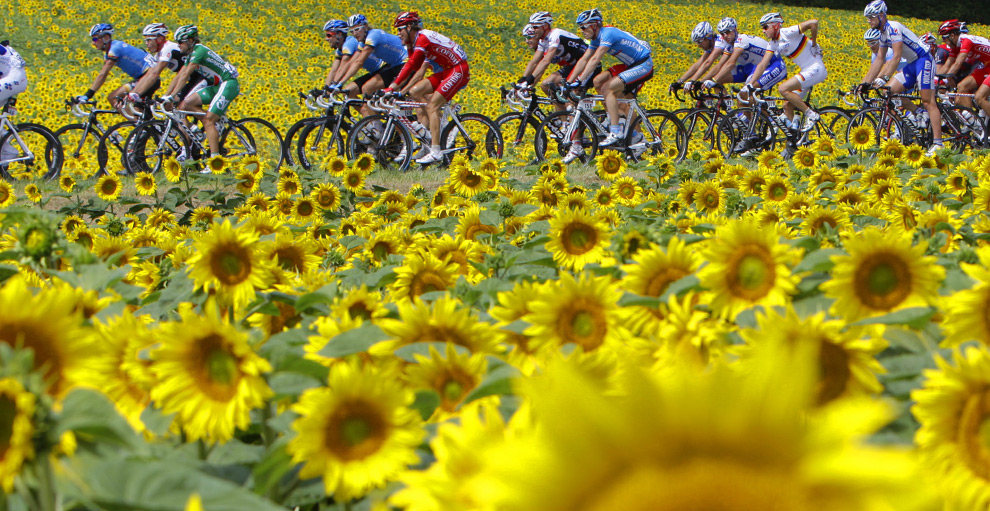 In the meantime I've been sidelined from any major kayaking because of my own hip issue, so have decided on the century option. It took a while to find something I could do that could be done on the North Shore and that either S.D. wouldn't ever want to do, or that I'd be happy to happy to do again. Riding one hundred miles in a single day fit the bill perfectly. It's been 4 years since the last one, and it's something I can train for without having to go too far from home. Of course the minute I sent in my registration, the temperature rose to 93 degrees and my first 50 mile bike ride was like pedaling through a heat furnace. Luckily I now know some good routes, and places to cool off.
Also, it's July and I can always pretend I'm riding a stage of the Tour de France.
Sunday, June 02, 2013
Just about everything that could, has
Yesterday we went into the hive and see if the new queen had been released. Hoping that she had, the hive had excepted her and she was busy laying eggs.
What we found was the queen and about 6 other bees all stuck in the queen box. They had chewed through the candy plug and somehow released a flap that kept them trapped inside.
The rest of the hive looks much the same. Messy, and now dead drone brood but still with lots of bees.
We shook the queen and all her cell mates into the hive, and closed it up for another week.
What we found was the queen and about 6 other bees all stuck in the queen box. They had chewed through the candy plug and somehow released a flap that kept them trapped inside.
The rest of the hive looks much the same. Messy, and now dead drone brood but still with lots of bees.
We shook the queen and all her cell mates into the hive, and closed it up for another week.
Saturday, June 01, 2013
Day 5: Pine nuts, pine cones, and Mount Whitney
 [Remember way back in March when we went to Death Valley? This is one of two remaining posts from that long ago vacation]
 There are times when I struggle with the leave no trace take no thing ethic. Hiking up to the Whitney Portal, the trail littered with perfectly formed giant Douglas Fir pine cones was one of them.
At the trailhead, 3 miles and 2000ft below there hadn't been a single tree. Like most of the landscape we'd been in, it was all desert. Slightly lusher than Death Valley, but obviously still the 'land of little rain'. The further west and up we hiked however, and especially when the trail dipped into the Lone Pine Creek valley, the vegetation increased, and the landscape became greener. At first there were small, lone pines, and then some flowers. The view of Mount Whitney was impressive, but far off in the distance, one little peak in the ridge line of the Sierras.
Rounding a bend in the trail and entering the creek valley we began to see snow and birds. The trees began to look more like a forest.

 , Daniel Arnold mentioned how the Timbisha Shoshone lived off pine nuts. Somehow while walking and watching the birds picking at fallen pine cones I began to connect those expensive little packages of cylindrical nuts from the grocery story with the Timbisha's nuts. When we stopped for a little break I leaned over, picked up a pine cone, pealed back one of the scales, and sure enough - there was a pine nut! And it was good. S.D. was a bit reluctant to try it, but he did. Later he was a bit annoyed when I kept stopping to sample more from pine cones scattered about the trail. But the novelty of it was too much to pass.
The trail by this point, was following closely upstream beside Lone Pine Creek. The valley was narrowing and the trees were getting taller and straighter, and our views of Whitney became fewer but more spectacular. Passing the intersections with Mescle trail we entered a mature Douglas Fir forest. The trees so high and so lush, being watered by both the creek and the rainfall and the understory was clear except for the presence of Pine Cones. Foot long Pine Cones, perfect examples of the Fibonacci principle in nature, dark, nutty brown, smelling of the forests.

I picked one up, then another, and marveled at their perfection. It was then I experienced my crisis of consciousness. What loss would there be to this magnificent forest if I were to take just one? Who would know? Really, what impact would it have here? How lovely a reminder of the trip it could be back home on the mantel? I could look at it everyday and remember this desert to forest to Mountain hike and feel...guilty?
But why would I feel guilty about taking the pine cone and not about eating the pine nut? I put the pine cone down, deferring those deep physiological questions for another day and went back to enjoying the forest and the ever more increasingly awesome views of Mount Whitney and the Sierras.
Sunday, May 26, 2013
Last Chance Bee Hive
The new queen arrived on Friday.
S.D. waited for a break in the rain, walked the hive over to the far corner of the yard and shook all the bees out. The idea behind it being that all the non-working bees and the existing queen, if she existed, wouldn't be able to find their way back to the hive. Then he set up the empty hive back in it's old location, for the working bees to find. The drone comb he put in the freezer to kill the larvae.
On Saturday, we waited for another break in the rain, a break that turned out to be the only one. S.D. installed the new queen, and returned the now-dead drone comb.
If the bees can clean out the drone comb, if they accept the queen, if the queen starts laying the minute she's out, and if the other bees live long enough the raise the new brood, then we just might have a bee hive.
S.D. waited for a break in the rain, walked the hive over to the far corner of the yard and shook all the bees out. The idea behind it being that all the non-working bees and the existing queen, if she existed, wouldn't be able to find their way back to the hive. Then he set up the empty hive back in it's old location, for the working bees to find. The drone comb he put in the freezer to kill the larvae.
On Saturday, we waited for another break in the rain, a break that turned out to be the only one. S.D. installed the new queen, and returned the now-dead drone comb.
If the bees can clean out the drone comb, if they accept the queen, if the queen starts laying the minute she's out, and if the other bees live long enough the raise the new brood, then we just might have a bee hive.
Tuesday, May 21, 2013
Killin' Bees

When we checked in on them Sunday, all we found was 'drone comb'. Pictured here it's basically a messy laying pattern, which means our queen, didn't get mated and is only laying sterile/male/drone eggs. Drones take longer to grow, supply a perfect breeding ground for mites, and do nothing but hang around the hive and eat (and breed if there is a queen in need of services). All similarities to human males aside, it's not the makings for a productive hive. In fact once they hatch and the nurse bees dies, the hive will die.
So we're going to do a little killing in preparation for a new queen. S.D. ordered one yesterday and by the time she gets here we hope to have all those drones, and drone cells out of there.
Saturday, May 11, 2013
Bringing Home the Pollen


----
Also, this is the 'beauty shot' of the hive location at the North end of the garden. You'd think with a set up like this, they'd be the happiest of bees.
Remedial reading. What's up with the hive?
It’s been 10 days since our last hive opening and time to take another look. During Bee School we'd attended a hive opening and watched a professional look at the individual frames and tell us how the hive was faring. It was like he was reading a book. For instance one of the frames had these giant cells hanging off the bottom. That meant the hive was raising drones, as he looked around the rest of the frames he was able to read other clues that explained why.
Now it was our turn to try and read hive. And it was going to be a remedial reading at best.
We already knew the workers had been busy. We'd seen some of them returning with full pollen sacks(yes I crouched at the side of the hive entrance waiting for that brief moment when they land but before they scuttle onto the hive. Just to catch a glimpse of tiny little insect legs bulging with brightly colored pollen, mostly green). Pollen gather can be read to mean that the bees are probably feeding eggs and pupae. But the real proof would come with the hive inspection.
For this, the second hive inspection, we understood that we were to try and find the queen (again), see if she was laying eggs, spot some cells with eggs, developing larvae and capped cells (to show that she’d been laying for at least 10 days) and check that the workers were attending to their various jobs. Ideally the queen lays her eggs in consecutive cells in the lower parts of the frames forming a neat half-circle pattern, and the workers would have drawn out more comb, been feeding the eggs and creating royal jelly for them to float in.
So what did we see? In the outer 3 or 4 frames, we saw bees. Still lots of bees. No more than last time, but really not many less either. We saw lots of eggs covered in royal jelly. We saw some round larvae and maybe some capped brood? We can’t say any of this was in too organized of a pattern. I think we even saw some pollen stores. Not enough to warrant all their gathering activity, but some. Aside from the fact that the eggs, pupae, etc were roughly grouped together, and there wasn’t any discernible overall pattern, it all looked okay, at least to us.
Then we got to the inner frame. Still lots of bees, but we also saw would looked like a cells with multiple eggs and one cell, wider and more drawn out than the others. A Supercedure Cell. Multiple eggs in cells is a sign that the workers have started laying eggs. Workers can only lay sterile eggs that result in drones, and they only do that on very rare occasions when they aren’t happy with their queen. A supercedure cell means the hive has decided to raise her replacement.
Being new to hive reading, we weren’t sure how to interpret all this. After closing everything back up S.D. called our beekeeping mentor. A quick conversation confirmed our reading. The queen had been released on schedule and she had started laying eggs. The hive was doing a good job caring for and raising their new bees and they had also, for some reason, decided they needed a new queen. Due to the presence of newly laid eggs in the outer frames, it appeared that she was still in the hive (although we again failed to find her) but for some reason our bees felt she needed to go.
It’s going to be another two weeks before we can peek inside the hive. During that time, if we read the situation right, our bees will continue feeding and caring for all the eggs, and brood. Some of the new bees will have emerged and started their lives as good worker bees. The bees will also continue building out that supercedure cell and raising the queen. Depending on when they started, we could even have a new queen by then.
--- Sorry about the long time between entries, it’s been a busy time of year. More entries on our trip to Death Valley are also in the works. Please feel free to leave comments, I do read them, even if I get too far behind.
Now it was our turn to try and read hive. And it was going to be a remedial reading at best.
We already knew the workers had been busy. We'd seen some of them returning with full pollen sacks(yes I crouched at the side of the hive entrance waiting for that brief moment when they land but before they scuttle onto the hive. Just to catch a glimpse of tiny little insect legs bulging with brightly colored pollen, mostly green). Pollen gather can be read to mean that the bees are probably feeding eggs and pupae. But the real proof would come with the hive inspection.
For this, the second hive inspection, we understood that we were to try and find the queen (again), see if she was laying eggs, spot some cells with eggs, developing larvae and capped cells (to show that she’d been laying for at least 10 days) and check that the workers were attending to their various jobs. Ideally the queen lays her eggs in consecutive cells in the lower parts of the frames forming a neat half-circle pattern, and the workers would have drawn out more comb, been feeding the eggs and creating royal jelly for them to float in.
 |
| Those round semi-circles are the larvae. Not sure if the filled cells are pollen, capped brood, or honey. |
Then we got to the inner frame. Still lots of bees, but we also saw would looked like a cells with multiple eggs and one cell, wider and more drawn out than the others. A Supercedure Cell. Multiple eggs in cells is a sign that the workers have started laying eggs. Workers can only lay sterile eggs that result in drones, and they only do that on very rare occasions when they aren’t happy with their queen. A supercedure cell means the hive has decided to raise her replacement.
 |
| The Supercedure cell. To the left are the cells with multiple eggs |
It’s going to be another two weeks before we can peek inside the hive. During that time, if we read the situation right, our bees will continue feeding and caring for all the eggs, and brood. Some of the new bees will have emerged and started their lives as good worker bees. The bees will also continue building out that supercedure cell and raising the queen. Depending on when they started, we could even have a new queen by then.
--- Sorry about the long time between entries, it’s been a busy time of year. More entries on our trip to Death Valley are also in the works. Please feel free to leave comments, I do read them, even if I get too far behind.
Subscribe to:
Posts (Atom)