Showing posts with label books. Show all posts

Friday, May 11, 2012

Triple threat?

Last night at Gracie's bar, while sipping a local Full Suspension IPA and watching the bike commuters stream by, a fellow librarian stopped by to talk about this great book store he'd found two blocks to the East.  Could Salt Lake City be a triple threat on the BBB scale?

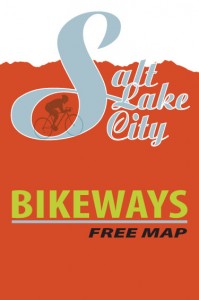
The beer is awesome. A rich, smooth, full selection and coincidentally, low alchohol, so I have tried a more than usual number of different brews. The bikes are everywhere. There are roughly 10 bike shops in town and the city supports an extensive network or trails and bike lanes.  I picked up a map at the visitor center which not only shows a large number of bike only routes, but also lists all the rules of the road and the general theory behind it all.

The bookstores? Those too are prolific. Although most appear to specialize in used, collectable books the selection is more varied, yet complete than in stores that sell new books.

On the BBB scale, Salt Lake City rates a perfect 555. But is it all that good, or are there limits to the BBB scale? Something there is that doesn't love this town. Which isn't to say I would ever pass up a chance to visit, drink a beer and take a ride!


Tuesday, February 28, 2012

Bermuda Books and History

There are very few bookstores where you can ask “Do you have the Jarvis book?” and they will know what you are referring to, fewer still where they'll reply “Usually we do, but we're sold out. We should be getting more in next week.” Bermuda is actually, probably, the only place. The “Jarvis” book to which I was referring is the 600 plus page, 10pt font, meticulously-researched, heavily-footnoted, scholarly-tome, In the Eye of All Trade: Bermuda, Bermudians, and the Maritime Atlantic World, 1680-1783 (Omohundro Institute of Early American History and Culture) .  Published in 2010, the book is a credit to the Island's history. The fact that is it a nation-wide best-seller is a credit to the Islanders.

I was a bit confused however to find that while every bookstore carried an extensive list of Bermuda history titles from Dispatches from Bermuda: The Civil War Letters of Charles Maxwell Allen, United States Consul at Bermuda, 1861-1888 (Civil War in the North) to Rogues & Runners , the actual Island seemingly disregarded their history.

It's taken two weeks to understand this apparent contradiction. It is in its relationship to history that Bermuda seems to be its most British. Why they  make little of their historic buildings and forts (forts from 5 centuries line the coast), but at the same time read books like the Jarvis book. This morning however, it became clear. Like Britain, there is so much history everywhere, and in everything that making monuments or museums to every piece would necessitate turning the entire Island into a museum but everyone knows the history, everyone reads the books – at least enough to support a significant Bermuda History section in every bookstore.

That said, Bermuda is hosting a conference in June on its maritime history. With tours and lectures it sounds, at least to me, like lots of fun.

I'm thinking of getting a Kindle Fire, Full Color 7" Multi-touch Display, Wi-Fi and also some sheets: 1500 Thread Count Queen 4pc Bed Sheet Set Egyptian Quality Deep Pocket Sage

Wednesday, October 26, 2011

The BBB Scale: a proposal for town assessment

When bicycling through Holland Amy and I quickly learned that the first stop in any town should be at the VVV (tourist information stop). The VVV is the place to get info on the town. Not only can you get info on campings, bathrooms, bike routes, but you can also get a feel for the town. In the States, it's not so easy but while in Seattle last month,  I decided that  the tenor of a town can be determined by looking into three factors; Bikes, Books, Beer. These three valuable indicators are indicative not only for their literal value but also for what information they tell about the town.

The ideal town would have a ratio of people to independent bookstores of 1:200,000. These bookstores would carry titles by local authors, have a large section of high-quality local history books, sponsor author talks and book groups, and be generally supportive of book culture.

Not a Bike Lane - notice cars
The high scoring town would also have a thriving bike-commuter population as evidenced by real bike lanes, not the suicide lanes such as in Boston, and plentiful and secure bike storage. Support of bike commuters is not just in and of itself important but also indicates a culture that supports outdoor recreation and is trying to make a dent in the U.S. car culture.

And finally good beer, or more to the point, micro-breweries, would be a celebrated by the perfect town. This important aspect of the BBB scale measures not only the actual presence and support of microbreweries, but also the prevalence of micro-brews on tap at the local bars - both high and low dollars. High support of micro brew culture is an indicator of local support for alternative, small businessmen, and locavors, all desirable qualities in a town. A symptom of a town that is proud of its accomplishments and people and can have fun doing it.

In the end, that is what it's all about, trying to find the town that is the most fun (Even if it's my definition of fun!) and that town has bikes, books, and beer!

Wednesday, August 18, 2010

Everest and K2 (books about)

Ed Viesters has a saying, *Getting up the mountain is optional, getting down is mandatory'. My Himalaya's quote is not so dramatic, “It's not just about having a great book to read on the train, its also about making sure not to cry every time someone summits or dies" (both of which happen with great regularity).

During my own peak bagging lull, while we're bike riding on weekends in preparation for a week's cycling vacation in Vermont and Northern New York, I've been climbing The Big Ones (mountains over 8000 meters) vicariously. It all started innocently enough when a friend recommended Last of His Kind, the biography of Bradford Washburn, the past director of the Boston Museum of Science, and lifelong climber of Alaskan Mountains.

Next someone lent me Edmund Hillary's account of his 1953 ascent of Mount Everett, View from the Summit: The Remarkable Memoir by the First Person to Conquer Everest. That then inspired me to reread Touching my fathers soul, a book by Tenzing's son who was part of the 1996 IMAX team. I'd read this book a few years ago as it talks a great deal about the Sherpa's, their climbing and culture. Then came Tom Hornbein's Everest: The West Ridge. Which tells not only how Tom Hornbein and Willi Unsoeld climbed Everest via the West Ridge route but also contains great quotes about mountaineering by the great mountaineers.

Then somehow I start 'climbing' K2. The second highest, and some say deadliest mountain. First there was K2: the savage mountain which is about the 1953 expedition. While one of the team members did die, it really is, as all the other mountaineers in the other books say, a book about the 'brotherhood' of climbers. The culture that makes for a great climb, instead of just a summit. K2: Life and Death on the Worlds Most Dangerous Mountain, details all the climbing attempts on the mountain.

And then came Ed Viesturs. The name had come up repeatedly in the other books. Apparently he was this guy who had decided to climb all 14 peaks above 8000 meters, without oxygen. He was with Jamling Norgay during the 1996 climb of Everest (his first summit of Everest without oxygen), he climbed K2 in 1993, and finished his quest in 2008 with Annapurna. I'd read somewhere that he had, with the assistance of David Roberts, written a book/autobiography. No shortcuts to the top is great! It is an honest look at an honest and really competent guy. Sometimes you wonder if he doesn't think a little too highly of himself, but then you realize, he's just relating the facts. It's the facts that speak highly of him. And he has a sense of humor. (Here's a clip of him on The Colbert Report)

It is said that books open up new worlds. Reading these mountaineering books I've not only seen worlds I'd never see in person, I've become slightly conversant in them, the people who have lived and died in them, the culture that is there, that congregates around the mountain,

And now, not only can I pretend to be in the Tour de France when I ride my bike, I can also pretend to be summitting K2, without oxygen, in 50 mph winds while hiking in the White Mountains.

Wednesday, July 14, 2010

Miles from Nowhere - Bicycle Touring

Miles From Nowhere is one of the best bicycling touring books ever! Joe Kurmaskie's Metal Cowboy: Tales from the Road Less Pedaled and Riding Outside The Lines: International Incidents and Other Misadventures with the Metal Cowboy are great fun, but they don't come close to describing the day – to – day hunting and gathering- all-the-while-dealing-with-new-cultures aspect that Barbara Savage manages to brings out during her and her husband Larry's two year ride around the world.

Today's world is remarkably different than the late 1970's when the Savages took their ride and you can't help wondering how it would play out today. Certainly they wouldn't need to go months without hearing from home, or pedal furiously over dirt roads to be in town for a wire-transfer, scheduled 6 months previous and we know that the wind still blows furiously in South Dakota and Austria, the Himilayans still have very high passes, India is hot and dry, and New Zealand is still populated predominantly by sheep but the bigger questions remain. Do drivers in the Florida Keys still run bicycles off the road? Can bicyclists still camp at Stonehedge? Do Egyptians continue to stare at foreigners, or just foreigners on bikes? Will New Zealanders loan you their car to tour the island? Can you still camp on the beaches in Tahti?

Hmmm, maybe I'll have to take a ride and find out.

Wednesday, March 10, 2010

Born to Run

Back in the day at Eastern Mountain Sports we had a life size cut out of ultra-marathoner Dean Karnazes. We had received it as part of a promotion for his autobiography, Ultramarathon Man: Confessions of an All-Night Runner. For a few weeks it stood at the front of the store and then Brian moved it to the back. To the bathroom actually, where every time you turned on the light the thing would scare the crap out of you. Because that thing was scary! Karnas was in full tilt, half naked, full wild-man running mode – and aimed right at you. But it not only scared the crap out of me, it also pissed the crap out of me. I've always really admired the long distance athletes. Marathoners, ultrmarathons, rides across the country, all that is just really cool . And here was this weird parody of a man representing all that in a way that was even scarier than most people already viewed it. Well actually, most people think distance events aren't so much scary as they are crazy.

And thats what brings us to today's topic - the Book Born to Run: A Hidden Tribe, Superathletes, and the Greatest Race the World Has Never Seen – the bestest book ever on running, long distance running, and the human body's true function and potential. Revolving around the story of one man's running injury and a tribe of life-long runners in Mexico, the author relates the history of running, ultra-marathons and marathoners, (in which he also mentions the exception that is Karnasses), human evolution, the evil that is the sneaker industry, the beauty that is the human foot, the misguided advise of the medical profession, and the potential in all of us.

The upshot - “baby we were born to run!”

Wednesday, February 24, 2010

Annual Celebration of the Vicarious Life

Real life has been so full this winter that I almost passed through the Season of Vicarious living without - living vicariously.  Riding the T every morning I've glared jealousy at the other commuters tucked into fluffy little paperbacks. Life may be good, but still, there is something about late winter that makes me want to live someone else's life for a little while. I guess that impulse is what drives some to reality tv, but for me it's what drives me to the Library.

And so it was during the gray snowy day that was last Wednesday I finally picked up some good winter-reading books and started making up for lost time. First off was Jack Keroucs' Satori in Paris, a 'vacation' as driven and chaotic as the best of them. On the historical side there was Remaking Boston: An Environmental History of the City and Its Surroundings (Pittsburgh Hist Urban Environ). A great collection of articles on the interaction of man, technology and geography. Did you know Boston used to have hills? and was practically an island? But the hills were leveled, the bays filled and Boston has grown.

Now I'm reading The Bad Book Affair: A Mobile Library Mystery (Mobile Library Mysteries), the semi-mystery about a mobile librarian in Northern Ireland who would rather be reading but finds himself accused of lending a 'bad book', American Pastoral, to a minor who subsequently disappears. Perhaps that will make up the lost time -  living vicariously through a book about a librarian who wishes he was living vicariously.

Friday, January 15, 2010

Mystic Seaport's Book Club

Having erudite discussions of the latest novel is some folks idea of a Book Club, Mystic Seaport's unofficial Book Club is another. Sure, we read and discuss books. We've read everything from Henry James' The Portrait of a Lady to Sarah Vowell's Assassination Vacation. The time we read a series of books on concubines was very illuminating as well as our attempt at Patrick O'Brian novels.

But the books are but a small part of this Book Club. And while I'll be able to read books where ever I go, I doubt I will ever again find such an interesting group of people to discuss them with. Far from being a compote* of individuals, these folks are of the highest, most valued kind of our society. The honesty of the group is amazing. Just yesterday the person who recommend this month's reading started the discussion by apologizing. The book had started out good (at which point she had recommended it) but finished very poorly. We all laughed and went of to the discussion. We've all recommended a bad once before. The
depth and breadth of life experience is also amazing. From 20 to 100 year old, North Americans and Europeans,  and from actuary to roustabout,  they've been everywhere, and done some surprising things. They also have an extrodinary appreciation of fine wine and food. Book Club is a pot luck, byob affair. We don't coordinate who is bringing what but you can always tell when things at work are pretty rough. Everyone shows up with wine.

Last night, after roughly ten years of being a member of this wonderful group I said goodbye. The second Thursday's of the month will never be the same.

Wednesday, November 18, 2009

From Sheep to Fish: What Scientists can learn from ethnohistory

Recently I picked up a book about sheep ranching in Navajo Country and began thinking about the recent protest by fisherman in Gloucester, Mass, and Orange Beach, Alabama against National Marine Fisheries Service's (NMFS) new policies intended to prevent overfishing and help stocks recover.

The book, Dreaming of Sheep in Navajo Country (Weyerhaeuser Environmental Books) focuses on the 1930s government instituted plan of livestock reduction in response to devastating overgrazing. The government plan was, according to the author, Marsha Weisiger, based upon scientific reality and was well-intended but when implemented without the input and cooperation of the people most effected was doomed to failure. Animosities created then between government representatives and tribal members stand in the way of the creating a continuing cooperative policy to work with the land.

Reading the newspaper articles and especially the comments relating to the Gloucester, Mass protest the parallels are obvious.NMFS maintains that their policy is based upon scientific reality and is intended to preserve stock. The fisherman insist the science is flawed but really focus on how the new policies will kill the smaller fisherman, i,e. the culture of the local fisherman. Carrying banners reading "National Marine Fisheries Service: Destroying Fisherman and their Communities Since 19??" they protest the end of their way of life.

Weisiger concludes her book stating that "conserving the range was not simply an ecological problem; it was a cultural one, too...[government officials] lost sight of the fact that a truly sustainable relationship with the natural world requires an ethical relationship with the land, with those who people it, and with the cultures that give it meaning."  Isn't it past time the fisheries problem was looked at as more than a ecological problem?

There are obvious strong, vibrant cultural, and associated cultural meanings that must be taken into consideration if a true solution to the fishery problem is to be reached.

Monday, October 12, 2009

Bad Bike Rider Corollary Effect

The book Traffic: Why We Drive the Way We Do (and What It Says About Us) aside from just being generally fascinating in what it reveals about our driving habits has some good insights into driver/cyclist dynamics as well. Citing a study by English psychologist Ian Walker, the book points out that car drivers tend to give more slack and be more cautious around cyclist whom they can not predict and whom do not appear to know what they are doing, i.e.
  • The further a cyclist rides from edge of the rode, the more space drivers give them
  • Drivers will pass closer to cyclist wearing helmets than those not.
  • Drivers pass further around a woman than a man (in other, non-cycling traffic studies, the majority of drivers, women included, treat women drivers as less predictable)
  • At an intersection, cyclist who fail to signal a turn are treated more cautiously than those who do.
Apparently, the best way to avoid being hit by a car is to not wear a helmet, wear a dress and ride erratically. It's truly a great study that will give readers a whole new perspective on driver/cyclist dynamics.

Will I, however, follow this line of reasoning? Heck no! For what I term the the Bad Bike Rider Corollary Effect.

Corollary is defined as a "proposition that follows from another that has been proved."  As such the above law has been proven. What remains to be seen/studied is how the driver will then treat the next bike rider they come upon, and the next, and the next. Having now ridden in several group rides and followed both good and bad riders, both Lycra-clad and non, I can tell you that the more badly behaving, non-signaling, non-riding to the right bike riders a car has to pass, the less leeway they give and the less cautious they become.  Heck, even I do it.

Monday, October 05, 2009

Long live Shakespeare

We are returning to a mob ruled, pre-industrial revolution society! If, as Lawrence W. Levine states in William Shakespeare in America, the first chapter of , Highbrow/Lowbrow: The Emergence of Cultural Hierarchy in America (The William E. Massey Sr. Lectures in the History of American Civilization) Shakespeare was the most popular playwright in America until the late eighteenth century because his plays reflected the American moral sense and worldview. A popularity that faded as individualism and moral virtue became less and less a rewarded characteristic of industrial man. Then, with the current replacement of the industrial revolution by the technological revolution, we are already beginning to see the resurgence of mass movement, crowd sourcing, twitter-organized protests, etc. balance by a respect for rugged individualism. In a nutshell, we are witnessing the return of the power of the individual to effect change through mass movements. Can the mass market popularity of Shakespeare be far behind?

Sunday, September 27, 2009

Adventures of the Bad Tourist

If you ever get the chance to go site seeing or museuming with me, don't. Hiking, biking, backpacking, kayaking, or anything like that – I'm a great companion, but touristing, even if you're lying, say you're busy. My present trip to Washington, DC confirms my long ignored suspicions that I have no talent for looking at things.

In the 2.5 days I was in DC I went to The Capitol, the Library of Congress, “The Castle”, the Museum of American History(more on the maritime exhibit in another post), the White House Visitor Center, the National Archives, The National Book Fair, Washington Monument, WWII Monument, Lincoln Monument, Vietnam War Memorial, and the Hershorn Art Museum, and I'm not sure what I got out of it.

Museum curators, when designing an exhibit, are trying to answer the question "So what?" Looking over their exhibits, the one question that keeps popping up in my head is "Why?" Why do I or anyone need to be here to see this stuff? What are we hoping/expecting/expected to get out of it?"

The Reading Room at the Library of Congress, the Lincoln Monument, the Vietnam Memorial and the Veterans and volunteers at the World War II Monument were truly awe inspiring. Climbing the steps to the Lincoln statue I recalled Sarah Vowell's description of her visit there in Assassination Vacation. (A book that looks at history by visiting sites associated with presidential assassinations) Not only does she tell of the creation of the Memorial, the citing and lighting issues, but also of her relation and how she stayed a long while watching other peoples. I cried. There is a feeling there, under this great man's gaze, inside this giant marble greek temple, on the top of hill, with the Washington Monument behind you, and behind that the Capitol. There is a sense of time too, both eternal, but also you sense his time, that "great battlefield" on which he was engaged, and that we too are on that battlefield, not in war sense, but in the sense of doing, and being what is right.

Exhibit wise, I was not so impressed, having more of a "been there, done that" or "I could have read this (and a lot more) just about anywhere" experience. I guess I lack that reverence for the "true cross" that museum folks always talk about. Seeing the original Star Spangled Banner left me more annoyed with the idolaters who cut out one of the stars than well, whatever we were supposed to feel/learn/? And don't even mention the "ruby' (aka plastic sequin) slippers to me. Then there was the White House Visitor Center. Since, for understandable reasons, visitors can't just tour the White House they have shunted them over to a building on Pennsylvania Avenue where there are a few aged panel exhibits and a 30 minute video tour of the White House. Excuse me? I came all the way to DC and you want me to sit and watch a mediocre video I could see anywhere? The more of these video tours I saw, the more annoyed I got with them. With one exception. The Castle runs a 10 minute introduction to all the Smithsonian Museums and is hosted by Ben Stiller. It's well produced and genuinely informative as opposed to the media sales talk type.

Well, could go on, but I won't. I will do a later post on the National Book Fair , another on the "On the Water" exhibit, but later.
Monday, August 10, 2009

Cycleskitzophrenia

Must one choose between being a road-racing type cyclist and being a more utilitarian, but still bike loving commuter type cyclist?

I ask because the feedback I'm getting on my last post as well as the very book that inspired the last post have me wondering. Jeff Mapes, author of said book certainly put in more than a few digs toward the "Lycra-cladded elite riding cyclist with bikes that cost more than my car". And on the other hand, a friend of a friend read my last post on urban cycling and recommended that I check out Rivendell Bicycle Works. A really cool San Francisco area bike shop seeking "to offer an alternative to racing-centric bikes and parts, and to espouse a different approach to riding." An approach that, reading through the pages on frames, components, clothes, etc. champions a less complicated bike with less stuff to go along with it.

Aside from their unmitigated love of wool as the ultimate in outdoor clothing material (because you can take the girl out of EMS but you can't take the EMS out of the girl - except where smartwool is concerned) they have some great ideas on riding. Ideas I whole-heartedly agree with. Ideas that make me yearn for Holland's magnificent bike culture. But I also like my lyrca, my carbon-fiber bike, and clipless pedals.

So I wonder, must this be an either-or proposition? Can't a Cyclist appreciate both or even all types of cycling? Is there not a time for hammering down the road, lyrca covered, pedals clipped, shimano ultegras seamlessly shifting, going no where but faster? (Preferable in the cool of the morning, on a freshly paved, traffic-free road) and also a time to load up the panniers for a relaxed-hair-blowing-in-the-breeze spin downtown to the store, friend's house or even work, uncomplicated by special clothes, fossil fuel consumption and heavy steel?

Thursday, August 06, 2009

Cycling Life - or Kelly Considers Becoming Militant

The largest chunk of public land in most urban areas is taken up by roads and parking spaces. Billions of acres and public dollars are spent adding to and maintaining that piece of the transportation infrastructure while only a few million goes to alternatives. Alternatives such as biking that yield a much higher return for each dollar spent not only in people-moving effectiveness, but also in increased heath care savings, lower pollution production and smaller global impacts.

If you're into cycling, not just recreationally, but also as a means of getting around and because it makes more sense than a car-centric culture, then I'd recommend reading Pedaling Revolution: How Cyclists Are Changing American Cities.

Yeah, I know, I don't live in a city but I do live somewhere where biking for utilitarian reasons makes a lot of sense and where, since reading this book, I've seen how just little changes in the way transportation funding is spent that could make bikes a whole lot more attractive as a means to get around. Take for instance the beautification project in Pawcatuck. They spent a lot of money to add brickwork to the sidewalks and in the process narrowed the road forcing bikers out into a busy and confusing traffic pattern. While, they could have, with just a little thought, made a very safe, and pretty, way for cars, bikers and pedestrians to get through town.

And speaking of cars, the more you look at them, the more you really 'see' what impact they have on our county, especially as compared to the elegant simple machine that is the bike, the more pissed off I get. Come on folks, stop driving to your mailbox, stop accepting a 50 minute commute as normal, stop going to the gym. Live an active life. Bike, walk, rip up concrete with your bare hands, turn in your clunker - use the cash to buy a bike. (Oh just imagine that bike! For $4000 you'd have the top of the line - not a downpayment on 5 more years of debt)

Photograph of bicycles at UC Davis taken by Ansel Adams in 1966. Photo view is due south from intersection of Shields Avenue and East Quad Road and showing the Wright Hall in the background.