Showing posts with label Chiloquin. Show all posts

Sunday, September 13, 2020

Livestock Evacuation


As last week's Two Four Two Wildfire billowed just a few miles to the North of home. Dave and I loaded the car and truck with financial papers, a few family heirlooms and camping gear (housing options for evacuees getting slimmer by the hour), and consigned most everything else to the flames.  Chances were good that we'd loose everything, the house, the cars, and lots of stuff. I however, had only one huge regret. I couldn't evacuate the sheep.

The Five Sheep of The Apocalypse


When planning for them - I thought I'd covered everything. They had a shady, clean and dry spot to sleep, plenty of pasture to graze, a secure boarder fence to keep them in, and the coyotes out. One thing I hadn't figured on however, was how to evacuate them in the case of a wildfire. Dave and I do not have any type of livestock trailer, or even pen that we could jury rig in the back of the truck.

Oblivious to all, Big, Little, Brownie, Roman and Brownie Boy, just went about their daily routine. A little grazing, a sip of water, an hour to two of ruminating in the shade, repeat. All we could do was hope that if the fire came the firefighters would cut the fence and let them out. It was a realistic plan. Given that the fire would come from the North, and that the sheep pasture, boarding the road on two sides, would be the fire line, there was an excellent chance that this would be where they stopped the fire.

At least that's what I rationalized. Once we were all packed and had a spare moment, I began researching other options. Livestock evacuation, especially where there is more livestock than people is a big operation.


Here in Klamath County, as soon as the fire started, the Fairground sent notice that the barns, stalls and turn outs were receiving animals. Volunteers mobilized to tend them for owners who themselves had been evacuated. Farmers and agricultural supply businesses donated bedding and feed. People posted used social media to send out requests for help, other people responded. Folks donated their own pastures, barns and food. From our house we watched empty trailers going North, full trailers coming back - even as huge black smoke clouds rose above us.

Fire? What fire?
Klamath County is in no way unique. This was, and is happening everywhere there are livestock in evacuation zones up and down the West Coast. In California, livestock evacuations happen so often that there is now a Group called Cowgirl 911. They're a huge volunteer operation that helps co-ordinate the evacuation and support efforts. Connecting evacuees with resources all throughout the west. Individual ranchers are also working overtime. I've been following one such ranch, Dot Ranch in Scio, Oregon.  The owner there has been out every day (almost every hour) pulling animals out of danger zones and getting them to safety. She's also been raising money for feed, and delivering hay and other essential supplies. The Klamath Basin Farmers  ran a convoy of seven semi-truckloads of hay up to ranchers in northern Oregon. And the list goes on.


Dave and I, and the sheep are all safe for now. But the fires are still burning, and there is a new fire watch for this evening and into tomorrow. I've got a better idea of what to do if we need to evacuate soon. Next year - there will be more fires - and I'll have a sure means, and place to take the sheep.




Friday, September 11, 2020

And We're Back


Smoke from the 242 Fire behind the house.
The small dot to the left is one of the 2 Scooper planes
that flew between the lake and the fire for 3 days.


I've been meaning to start writing again and what with being in the middle of major national event, now seems a good time.


This post is going to be about Fire. Coincidentally, my last post in December of 2018, was also about fire. Seems to be theme. An other theme, I've been meaning to write about is the differences between the East Coast and the West Coast. And here too, Fire is the perfect place to re-start.

On the East coast, and mid-country for that matter, fires are serious, often tragic, but bounded event.  They are contained both in a relatively small time and space. A home, business or empty lot will catch fire and burn. Within a day or two the fire will be put out and the painful process of recovery will begin.

Out West, or any dry region for that matter, Fires are a season. Once a fire starts, it really doesn't end until it rains...and it doesn't rain for months at a time. The goal of firefighting is to contain a fire, not to put it out, but rather to establish a barrier around the fire. Establishing the barrier, often around hundreds of thousands of acres is a huge task. Especially while also trying to protect homes and property within the fire zone and evacuate people and livestock out.

Right now, in the State of Oregon, over 900,000 acres are burning. Guess what state is just a little smaller than that? If you guessed Rhode Island, you are correct! So think about that, Rhode Island is burning, has been burning for about 3 weeks and will continue to burn for about 3 more (if we're lucky).

But wait, there's more! In California 3,577,926 acres are burning and in Washington there are  500,000 acres burning. So roughly 4 million acres or a little over the total acres in Connecticut.

Don't go yet! Idaho, Montana, and Colorado are also experiencing record fire seasons. (This is really getting depressing so I'm not going to run the numbers here). So lets just say, Connecticut, Massachusetts and Rhode Island are burning, have been burning for at least two weeks and will continue to burn for the next month.

That's a lot of burning!  A lot of displaced people and animals. A lot of ruined lives. Recovery can't even start to begin until it rains, and will then continue for a long time..until next fire season.

So, not a happy post to start back up on, so I will just briefly mention one other big difference between the West and East Coasts. The roads, or rather the condition of the roads. Every time I'm driving out West and see a "Caution - Bumpy Road" sign I gotta laugh.-Driving over the very slight "bump, I imagine the distress of the road crew trying to sign a typical Massachusetts or Rhode Island road.  They wouldn't know where to start - let alone where to place the signs amidst all the hub caps.


Tuesday, May 29, 2018

The Pelican Year

Pelican Butte
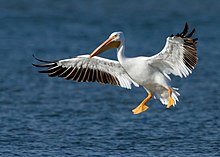
The pelicans are back. Not in the giant rafts like in late fall, but singly or in pairs.  SD and I can once again look out over Agency Lake and see a giant white bird in the cove, or flying gracefully overhead.  Last week while hiking along the dike at the Wood River Wetlands I saw a mass of large, white birds far off in the marsh.

The return of the American White Pelican signals the close of our first year here in Chiloquin. The pelicans were here when we looked at the house last Memorial Day weekend. By the time we moved into the house in July they were meeting up in the cove below us. Each day would begin with a pelican-less beach then gradually fill with more and more of the giant white birds until late afternoon or early evening when they would all fly up, wheel around in unison a few times and sail off North. As the summer progressed into fall the rafts (that's the name for a large group of pelicans) grew until there were at least 60 to 70.  SD and I assumed they stayed year round and wondered what they would do in winter. Then one day in mid-October they were gone.

Writing advice always says "write about what you know."  Until we lived here a whole year, until the
Great White Pelican - Wikipedia
Pelicans returned, I didn't feel I knew enough about this place to write about it. Like many things here I didn't understand what was going on. They came, they massed and then they were gone. Who knew what, or who would show up next? I'm sure there is still much to know but after living a full cycle I feel I just might have enough of a clue to start writing about this place and about our adventures here.

And so...back to the Pelicans. The pelicans here are the American White Pelican.  Much larger than the more common brown pelican they boast a 9 foot wingspan and live and breed in inland, shallow lakes, like Agency and Klamath.  The pelican's feeding areas (like the cove) are often miles from their breeding areas. (here I now suspect that's the Wood River Wetlands to our North). Over the last century their numbers have diminished but their presence in Klamath County remains strong. They are such an integral part of this area that they've given their name to countless other things. Across the lake from the house is Pelican Butte, to the East of which lies Pelican Bay.
Pelican Pete says "Hi"
The Klamath Union High School 's mascot is Pelican Pete. Pelican City, home to Pelican Lumber Company is between us and Klamath Falls.  There is also a Pelican Cinema, Pelican Senior Center, Pelican Signs, Pelican Elementary... you get the idea.

It is in the local tradition of naming everything after Pelicans and in the tradition of the Chinese zodiac that I have therefore named our first year here, the Pelican Year.


Tuesday, August 08, 2017

They're Just Here For the Sex

Cue the Barry White
It was less than a month ago, mid-July, that Dave and I moved into our new home. We closed on Tuesday and began moving our stuff in the next day.  Apparently we weren't the only ones moving in.  As we emerged from the truck swarms of bugs flew up from the grass, down from the leaves, and out from under the eaves of our dream home.  They hadn't been there for the initial showing, the house inspection or the final walk-through just two days ago. Now they were everywhere.
The previous home owner also happened to be there as well,
Roadside Attraction
hauling away her last load. She wasn't the least concerned about the bugs, "they're just here for the sex" she told us. Then drove away.

Well, the sex at our place must be awesome because the bugs are still here. Dave discovered that they are called Klamath Midges, that they don't have mouths (something he's assured both me and the guys replacing the septic system numerous times), that they generally live at the bottom of shallow lakes and indeed, they only come out
Through it all, the septic guys prevailed
once a year, for the sex.

Every night, just before dusk the whine begins. We couldn't believe it was the bugs making the high pitched whirling noise.  Certainly there were a lot of them, but the noise was loud, really loud. Then we saw the giant, black, morphing, spiralling bug clouds and we knew that we were witnessing the infamous Klamath Midge Mid-Summers Night Orgy.

The nights here are beginning to calm down. It may have
Kinda cute after all 
something to do with the flock of magpies that now arrive every evening just before dusk and hungrily feed on the midges, or it could just be that all midges have done their business.  Dave and I, on the other hand have lots more to do. Last night the full moon rose after a quiet, midge-less dusk. Dave and I sipped our wine, looked out across the Klamath Basin and thought....those bugs certainly know how to pick a romantic spot.